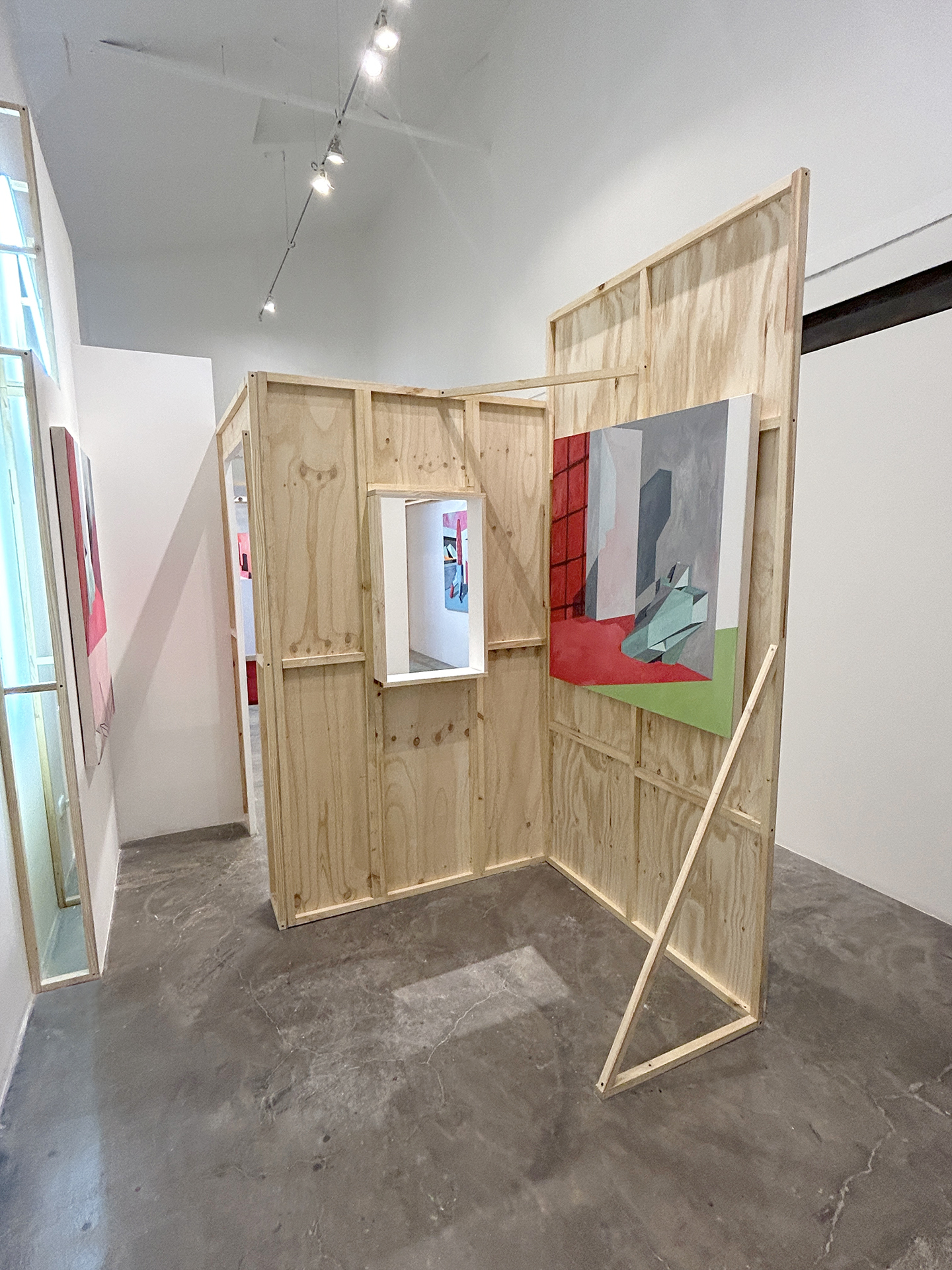
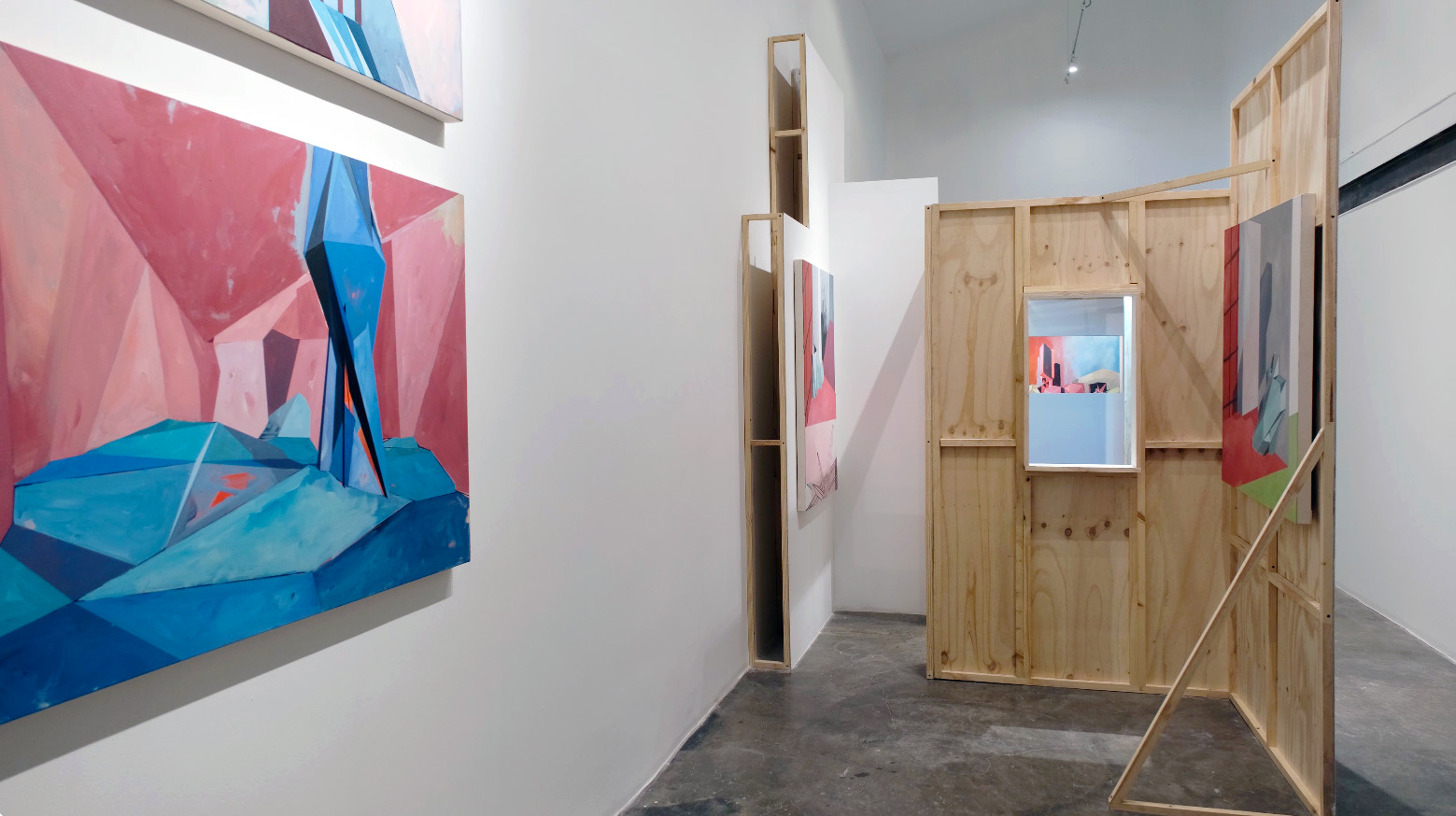
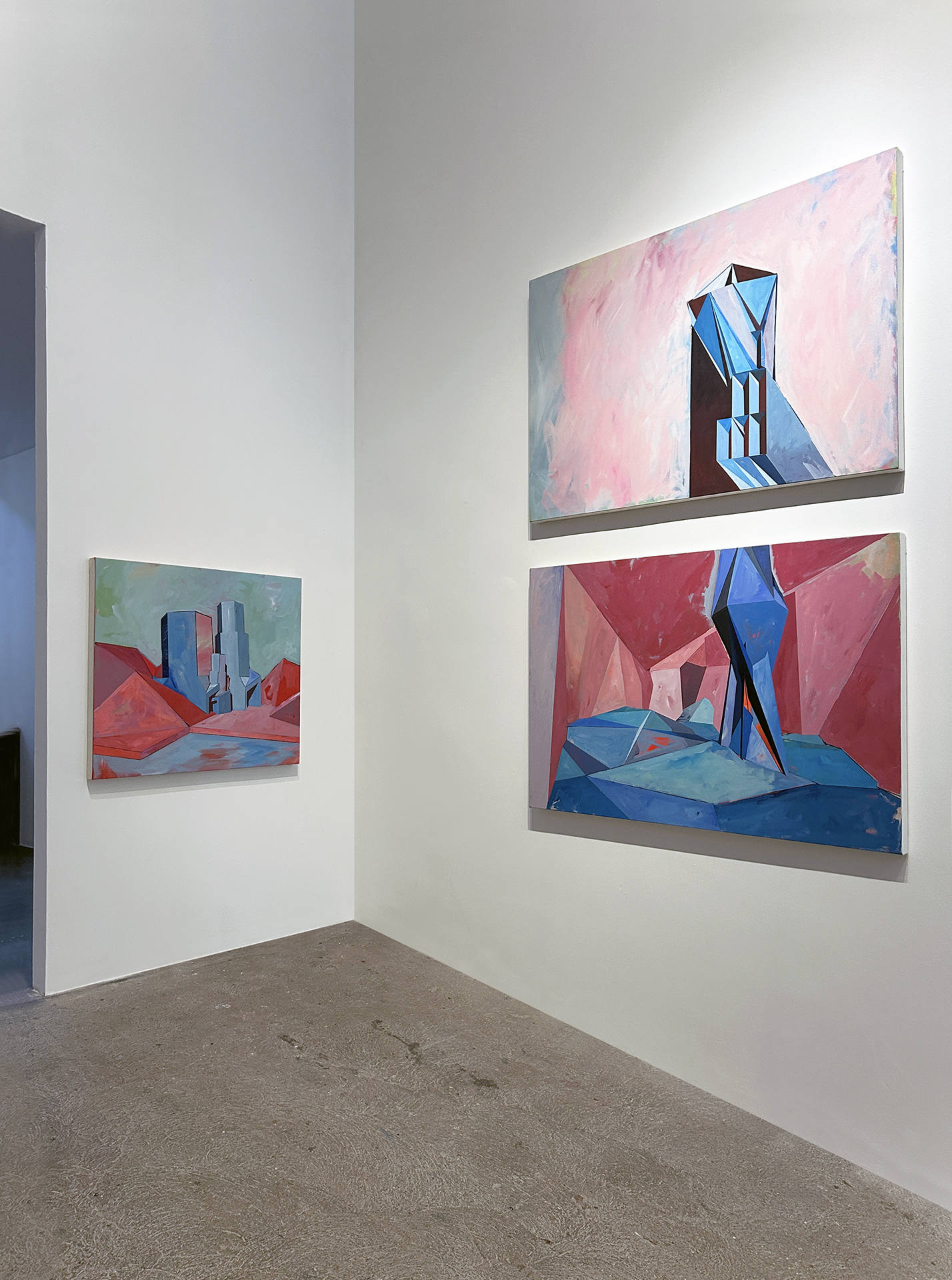
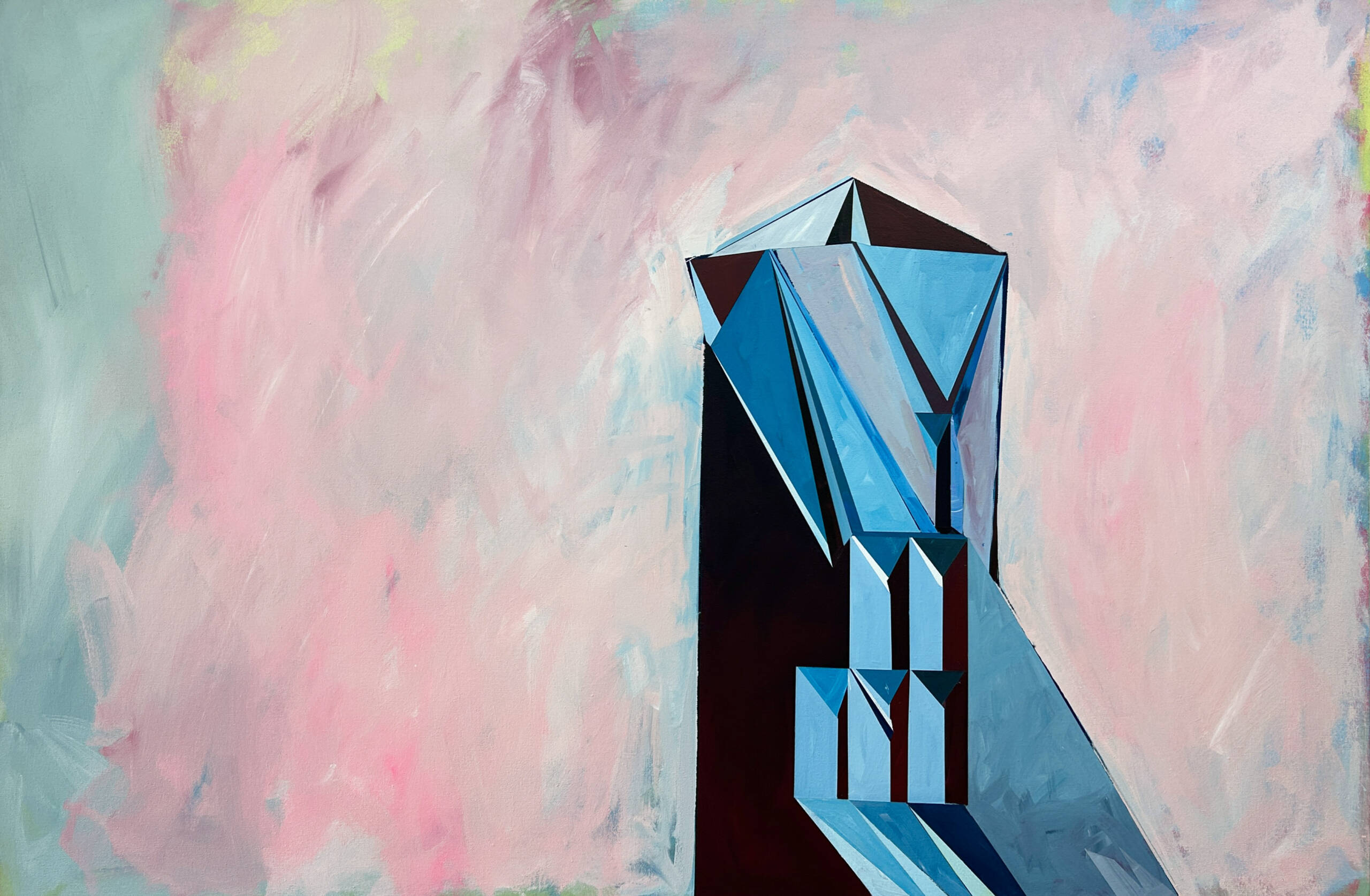
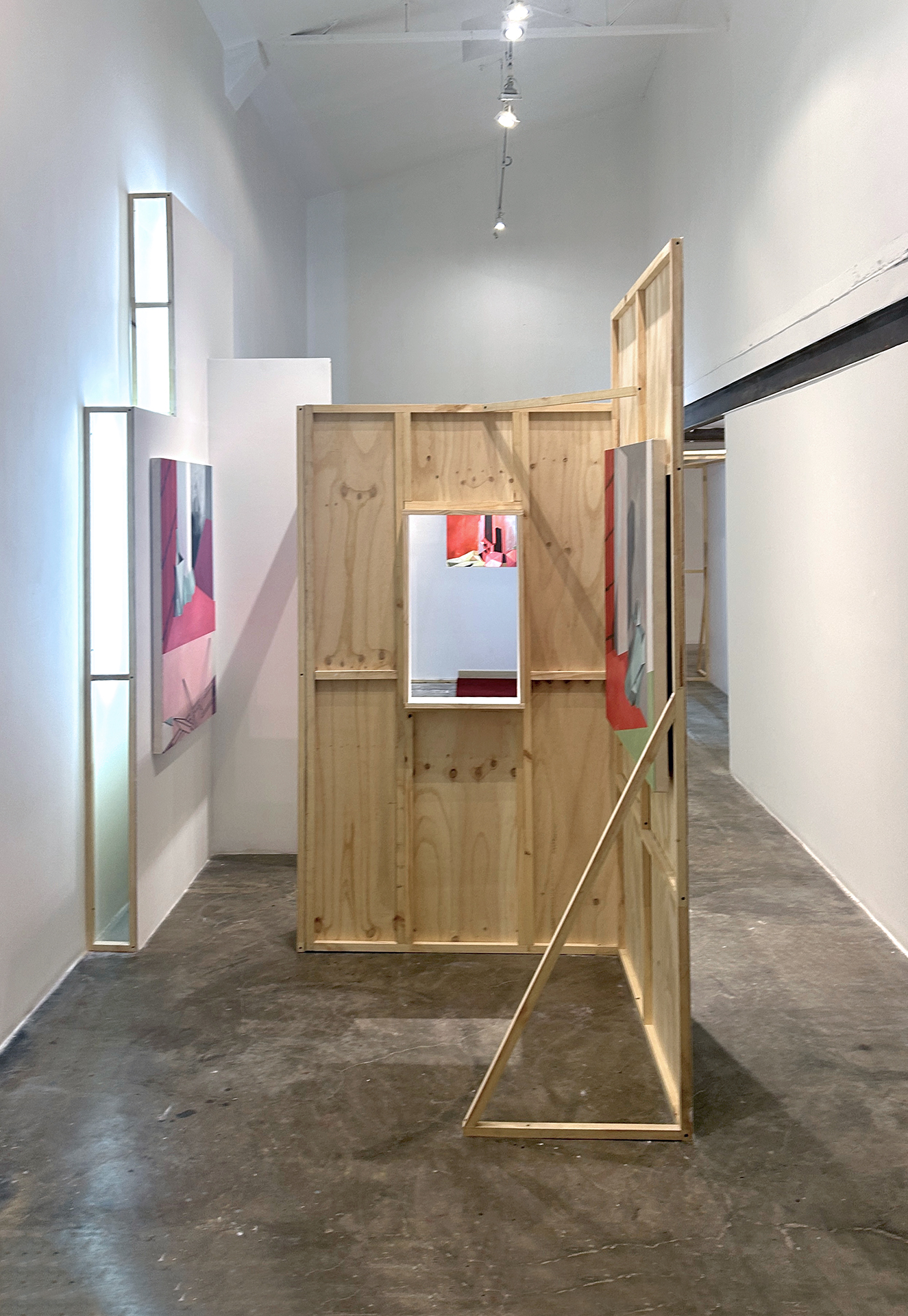
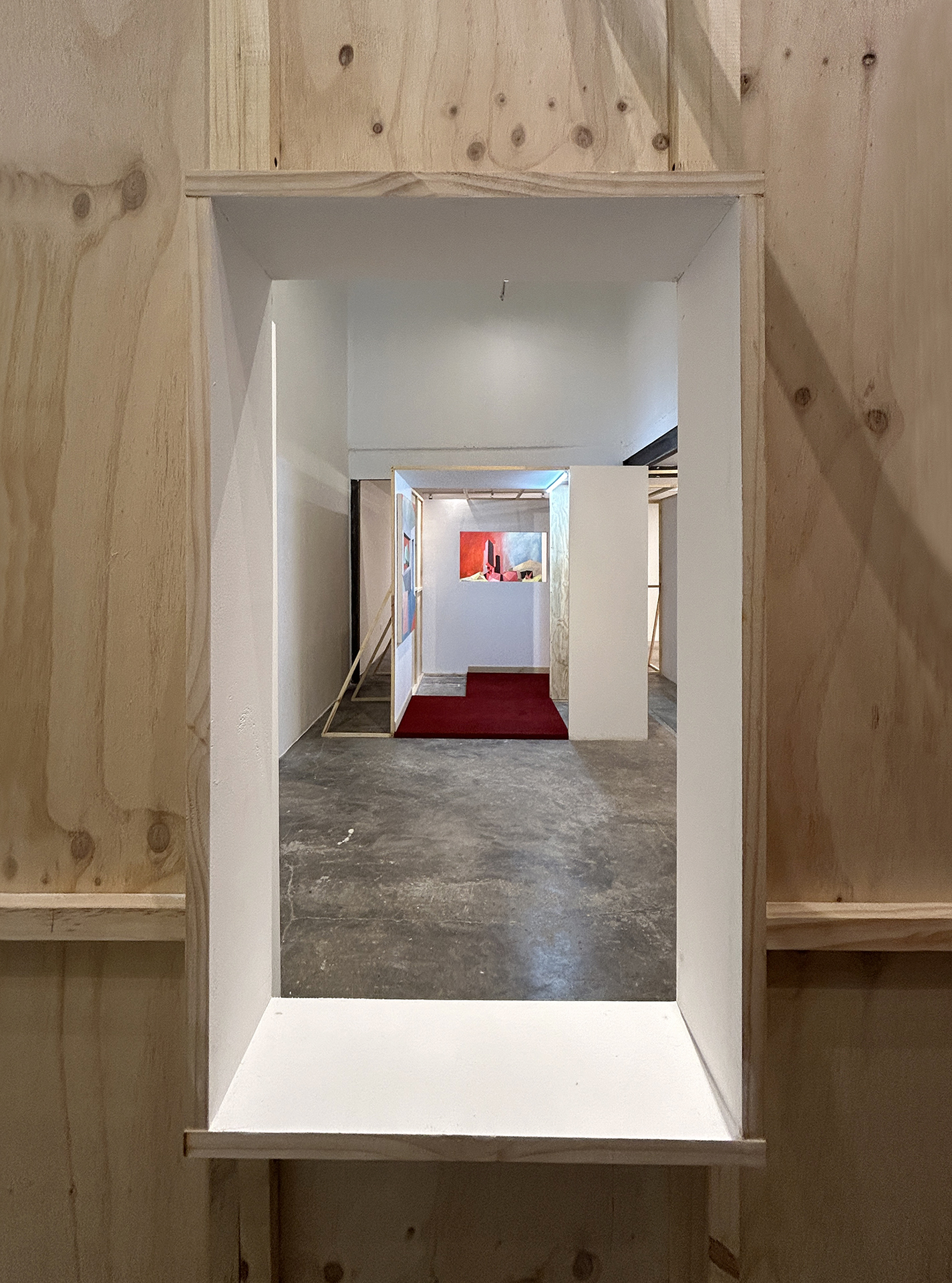
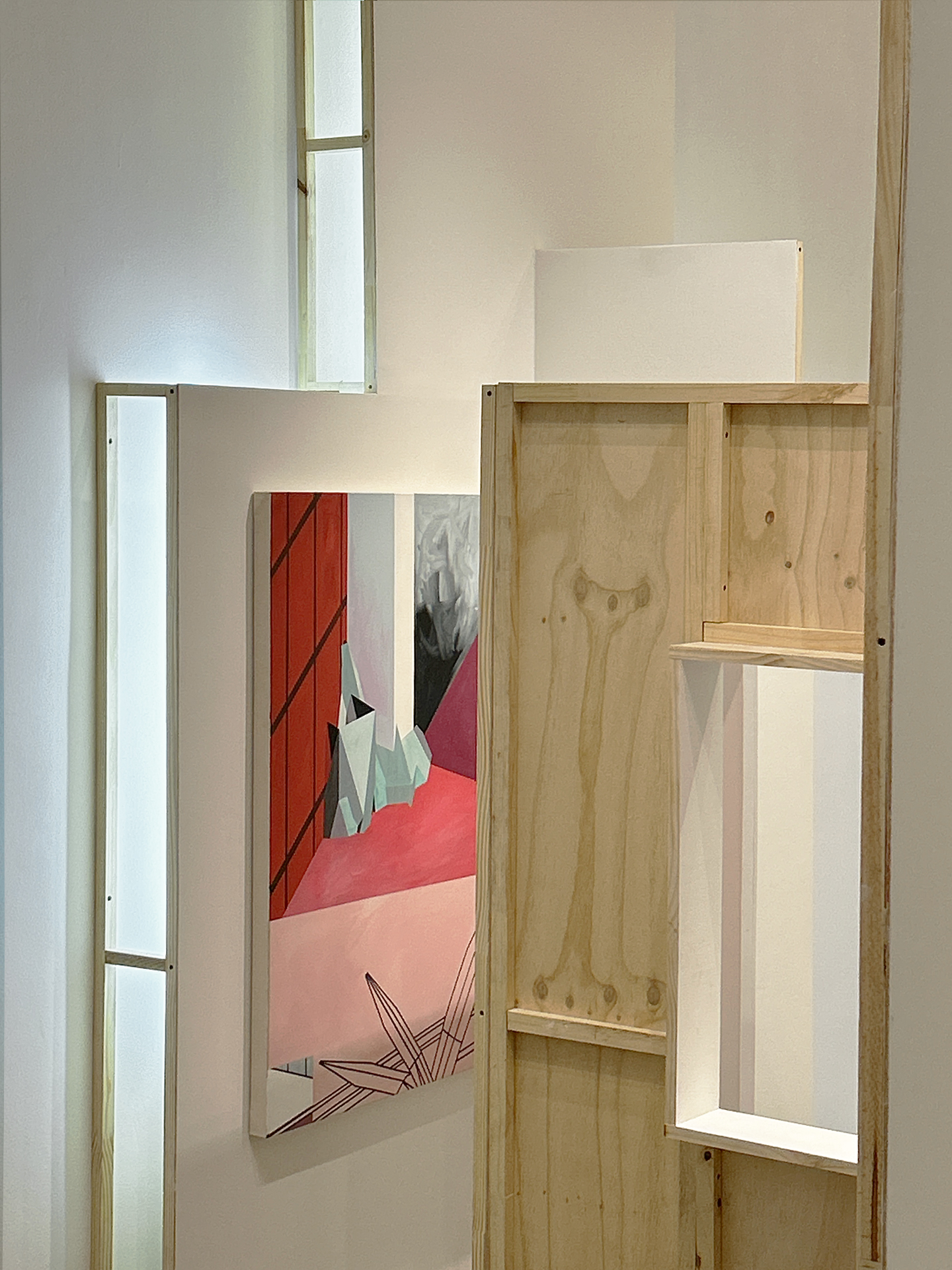
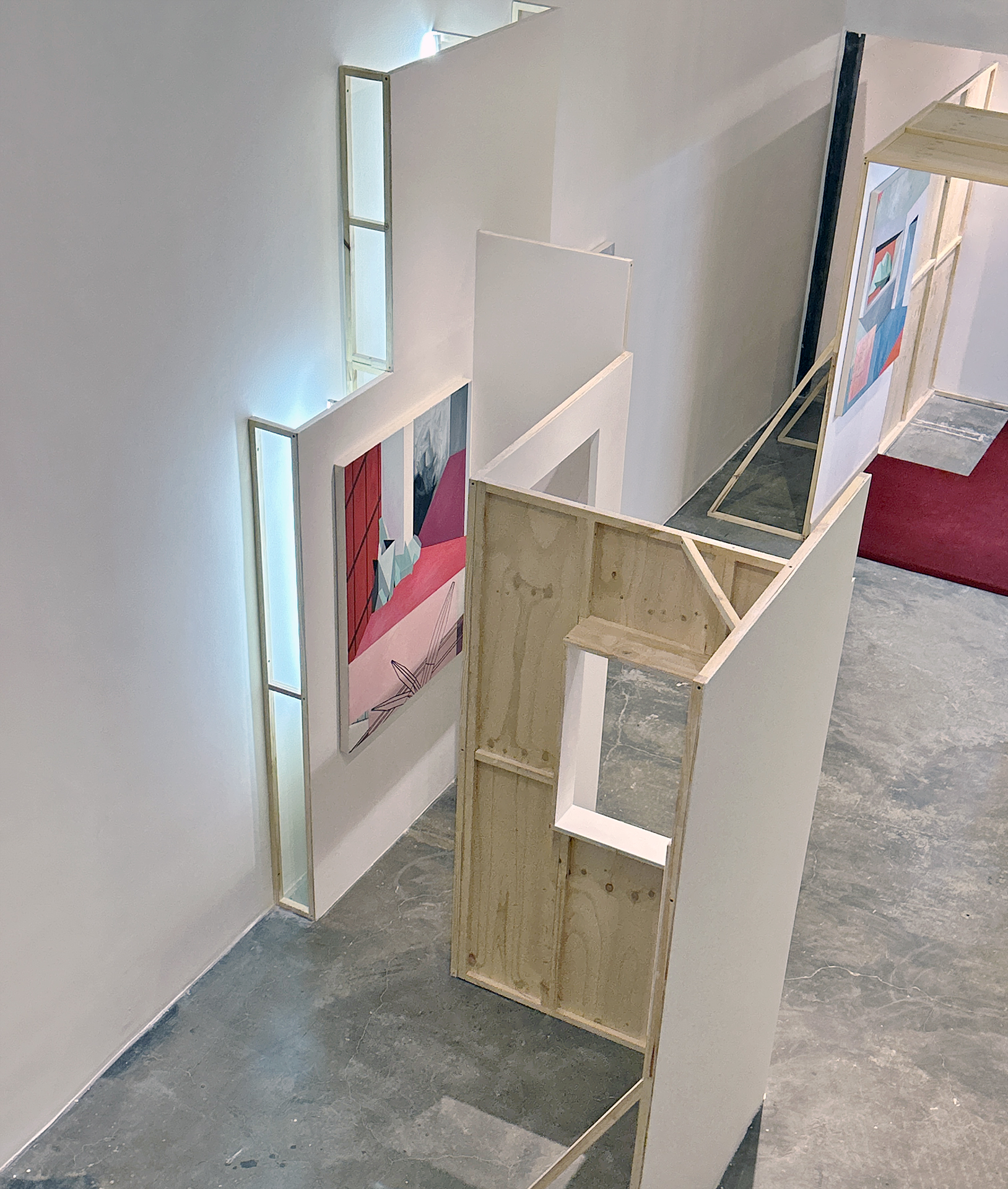
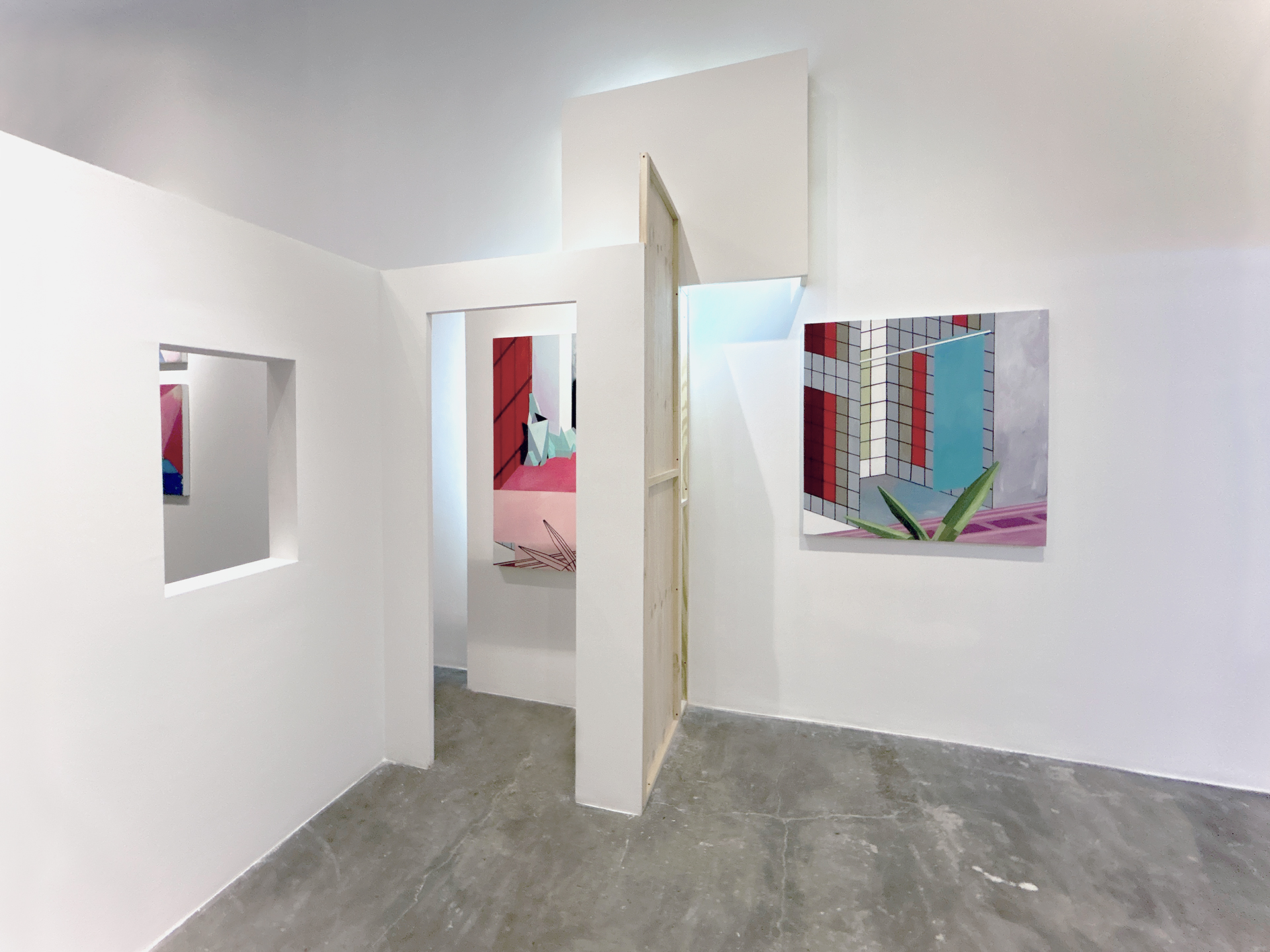
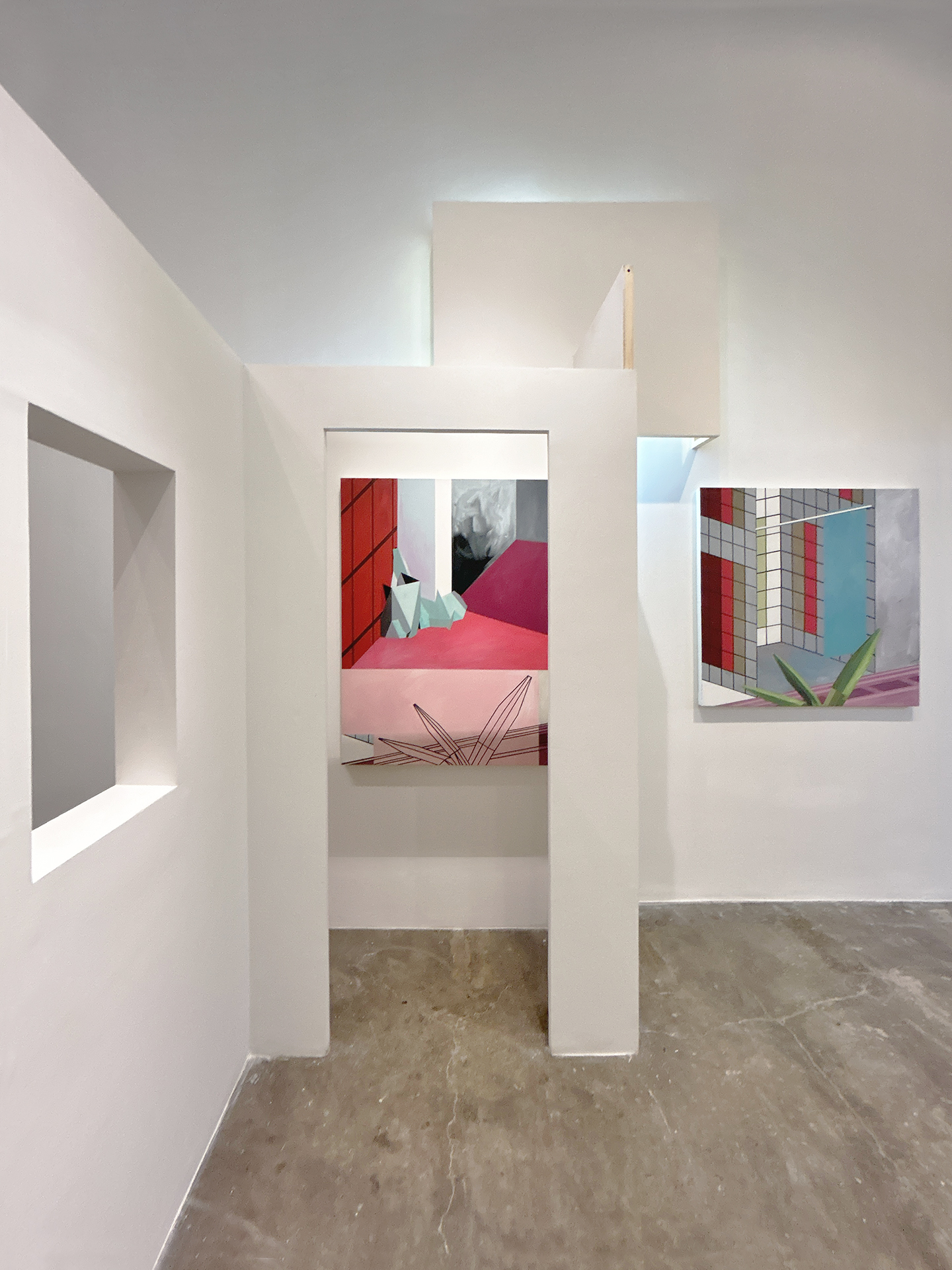
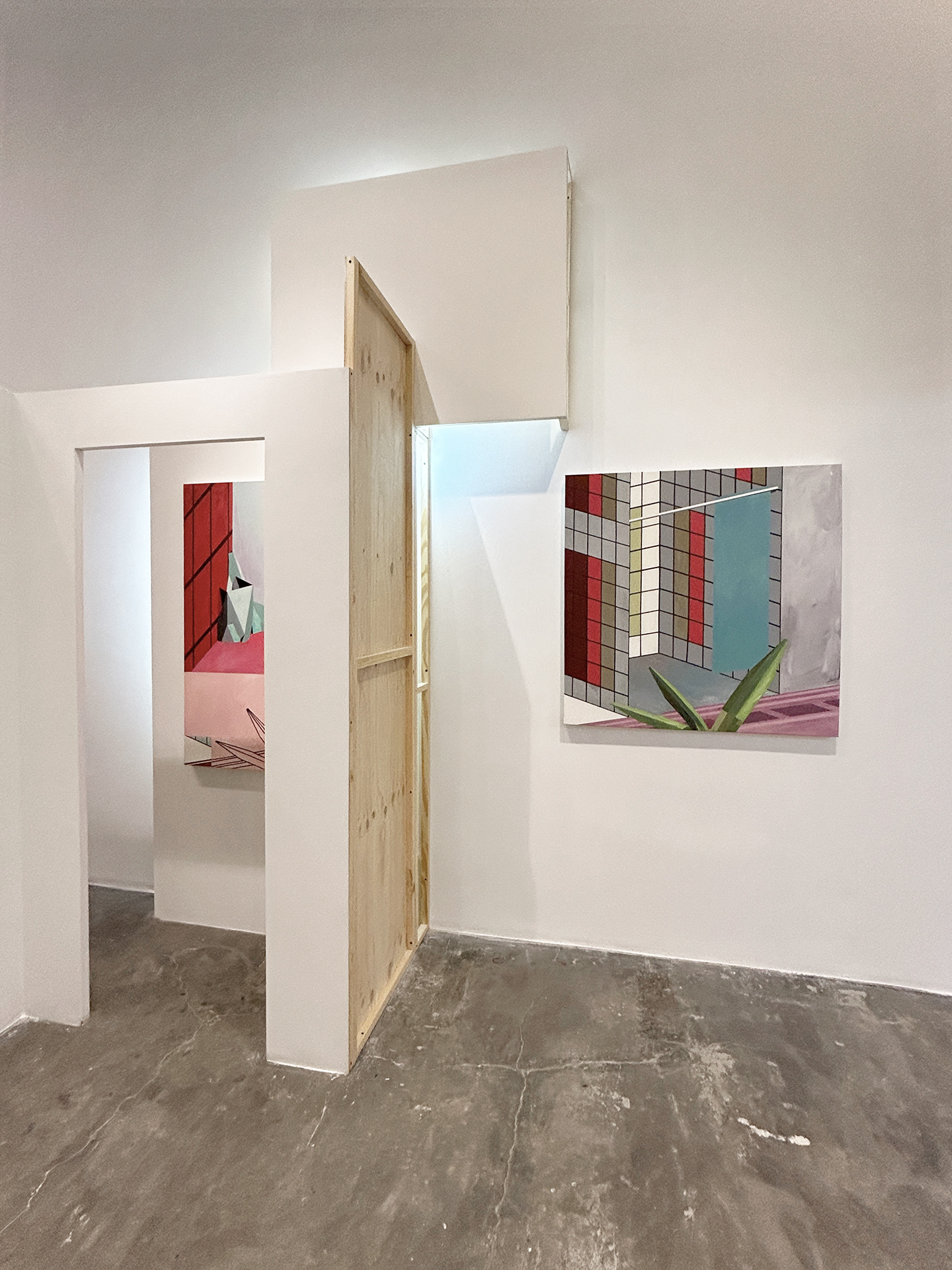
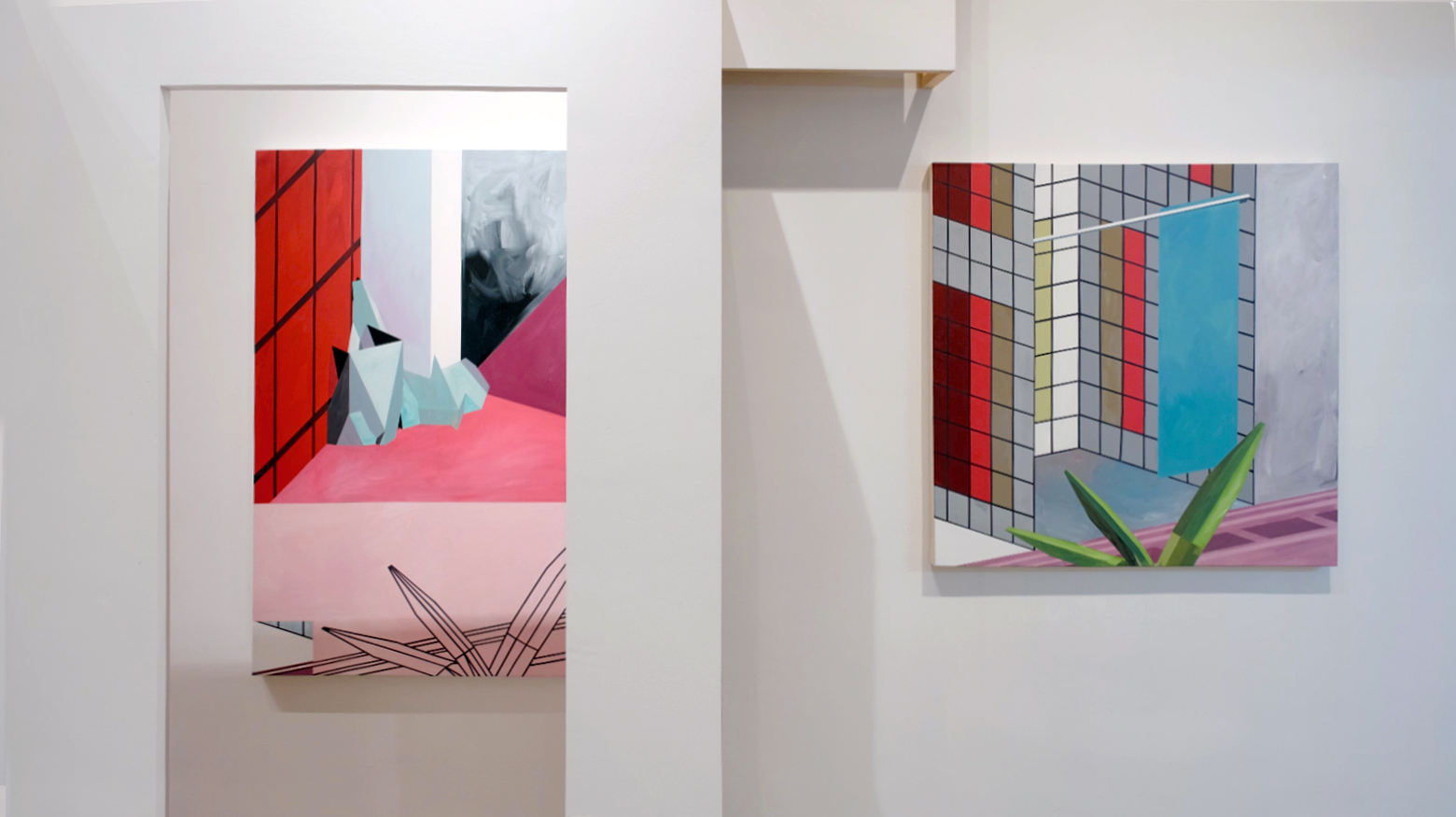
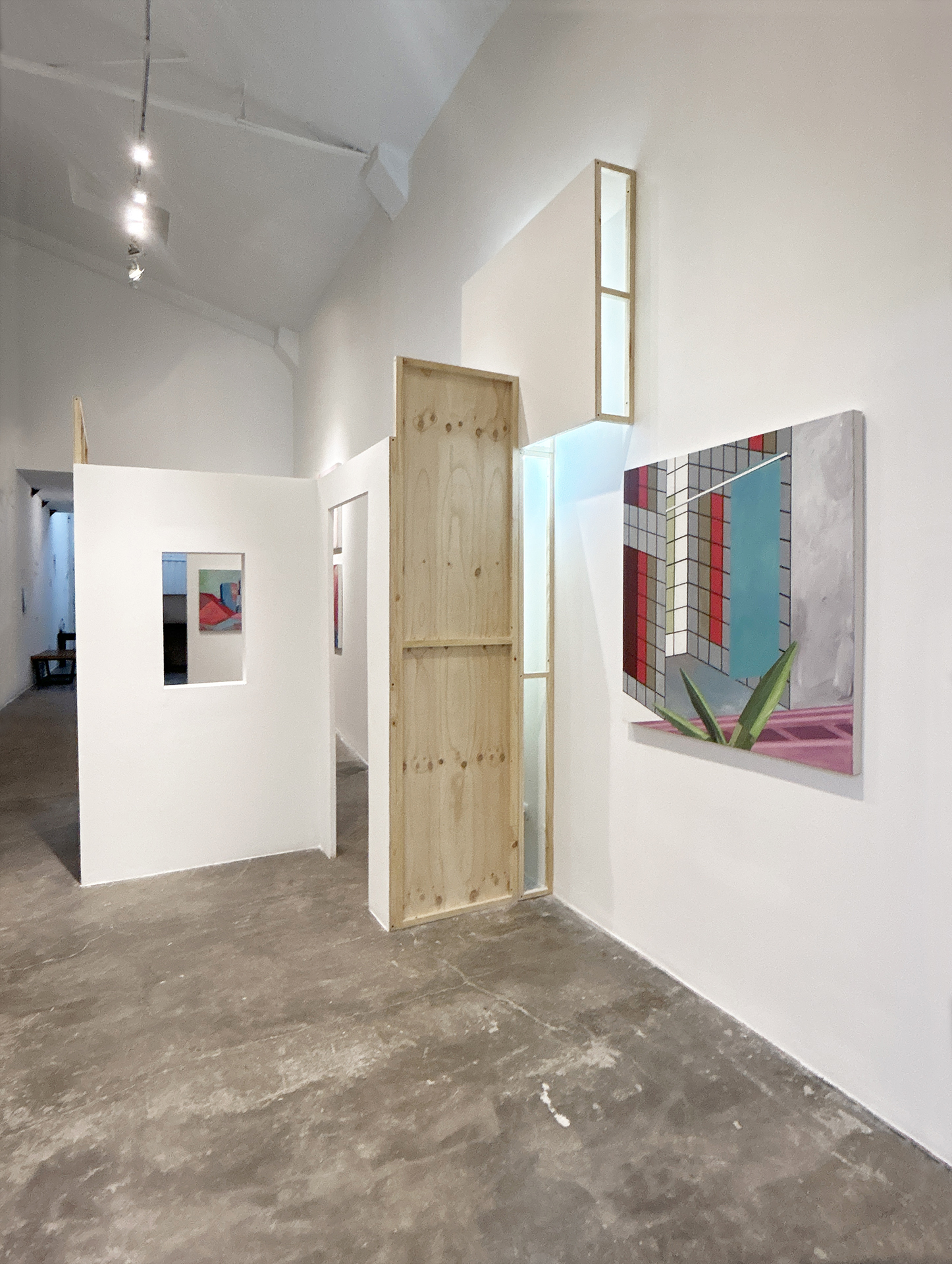
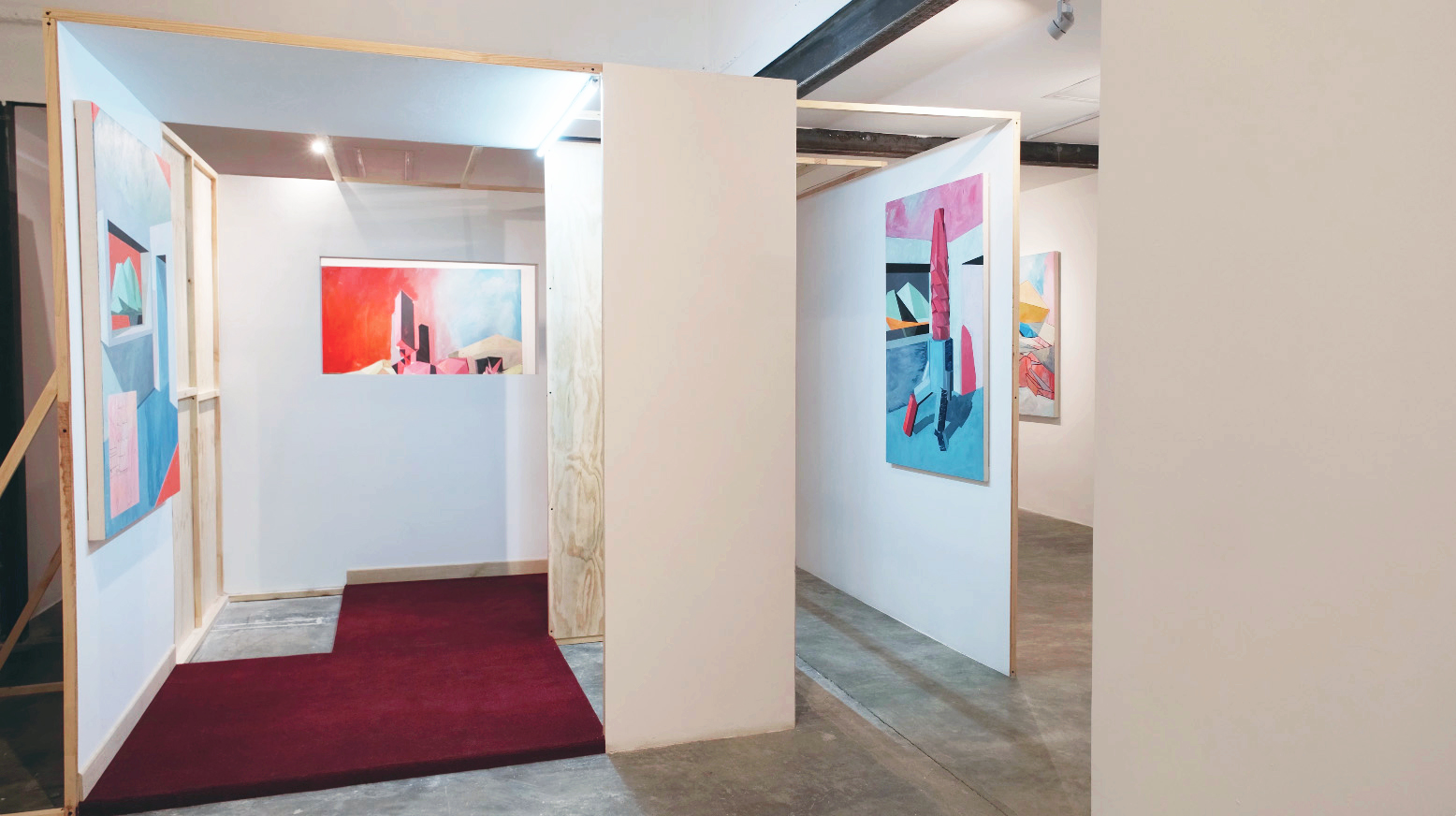
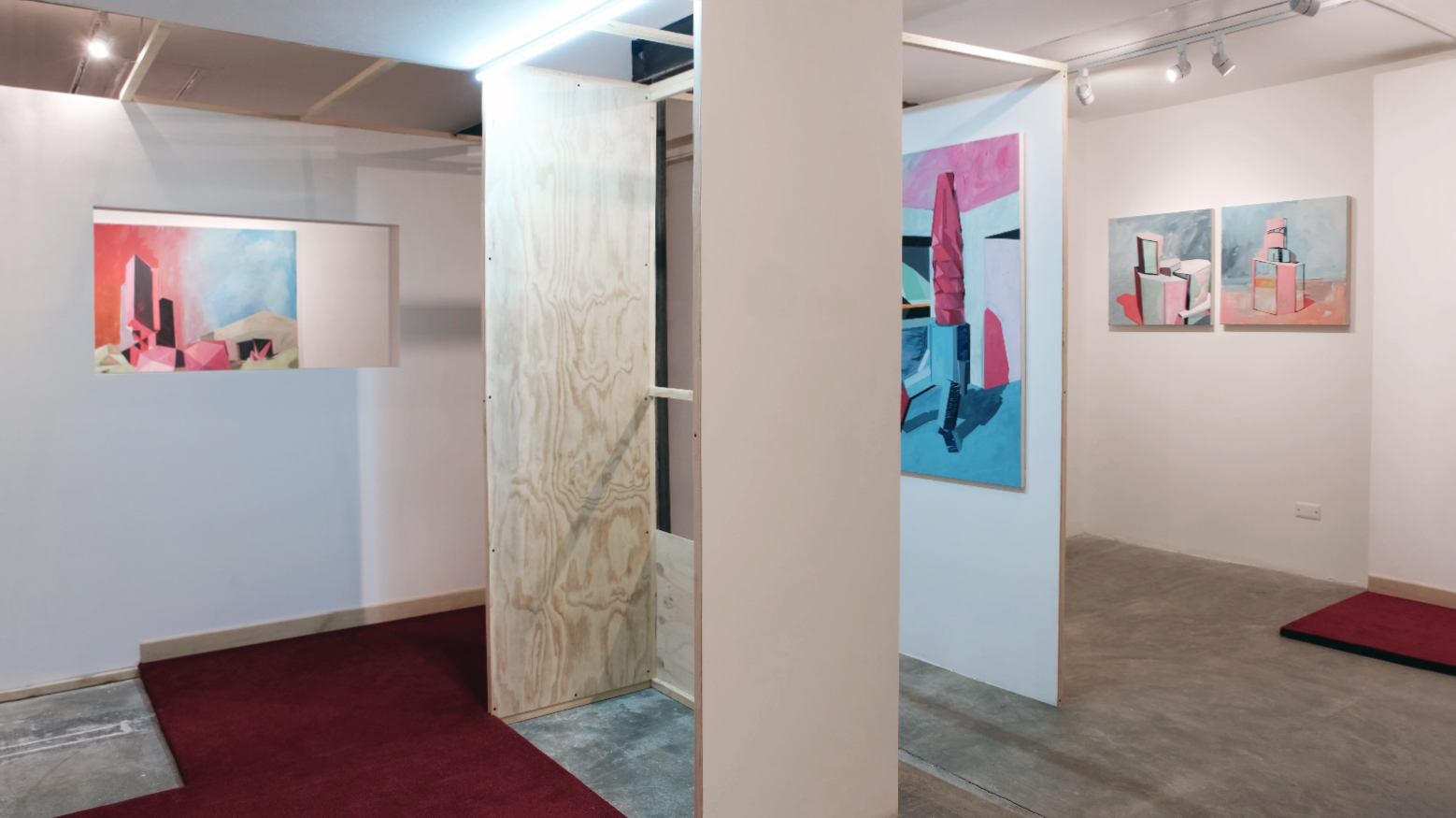
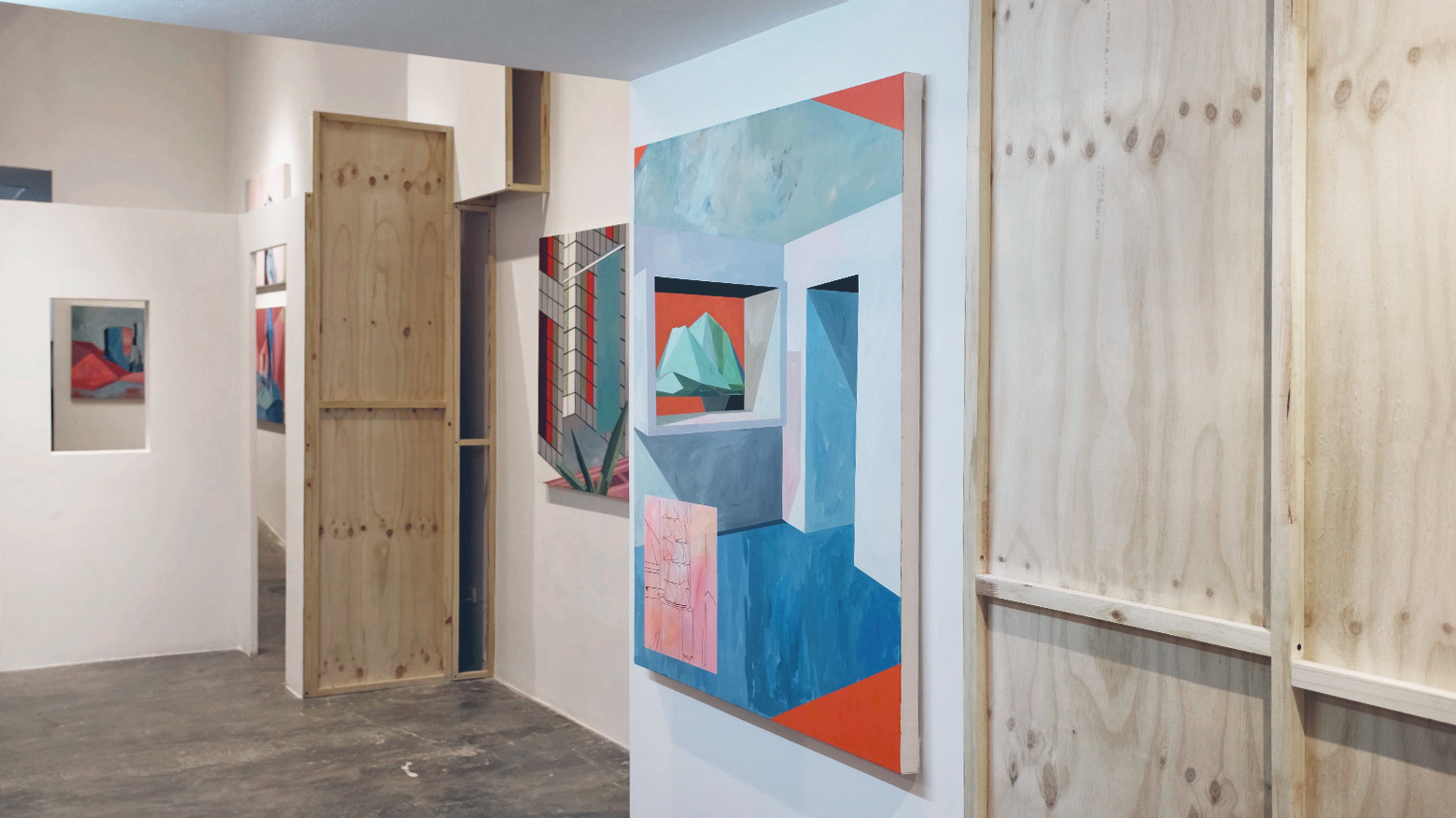
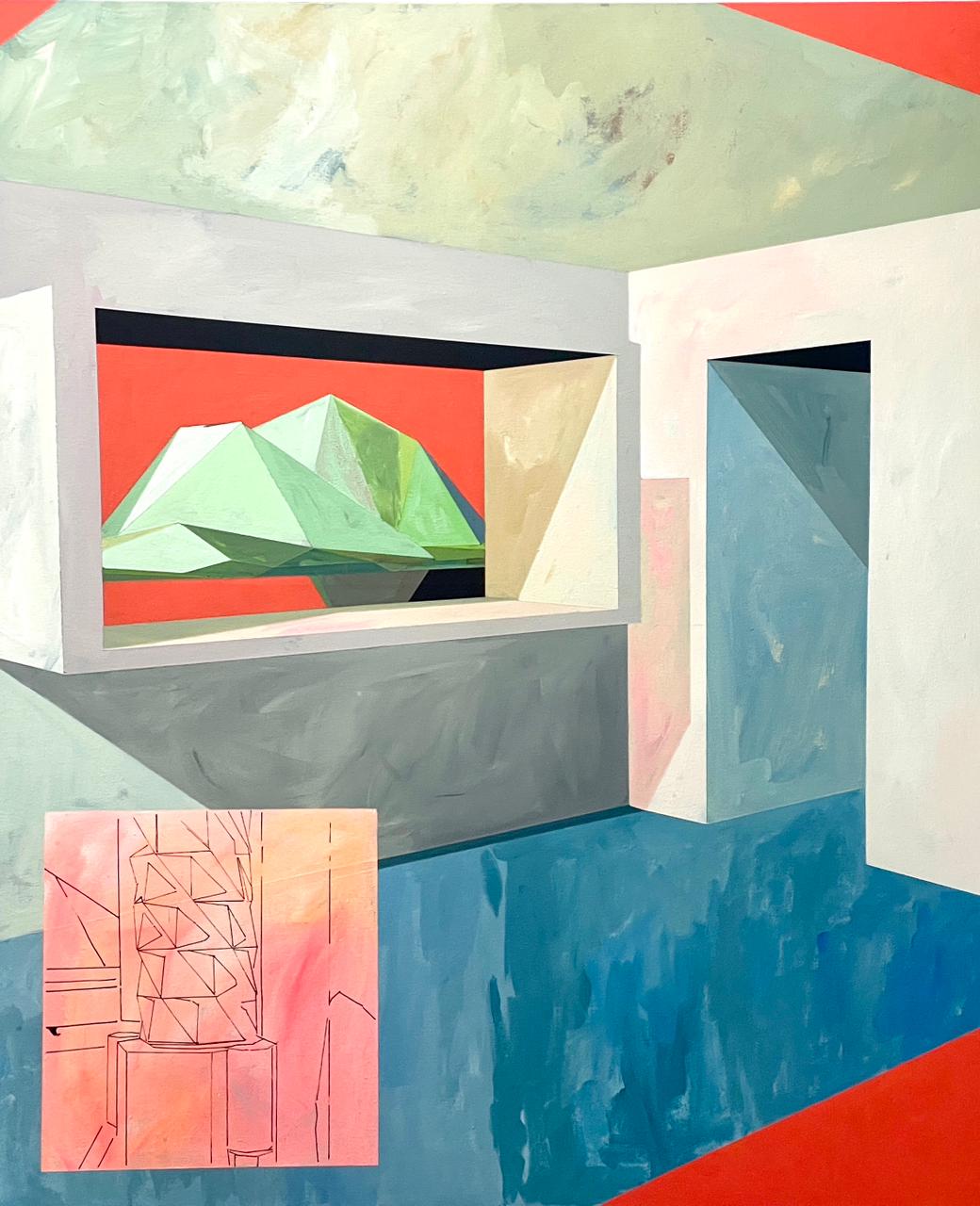
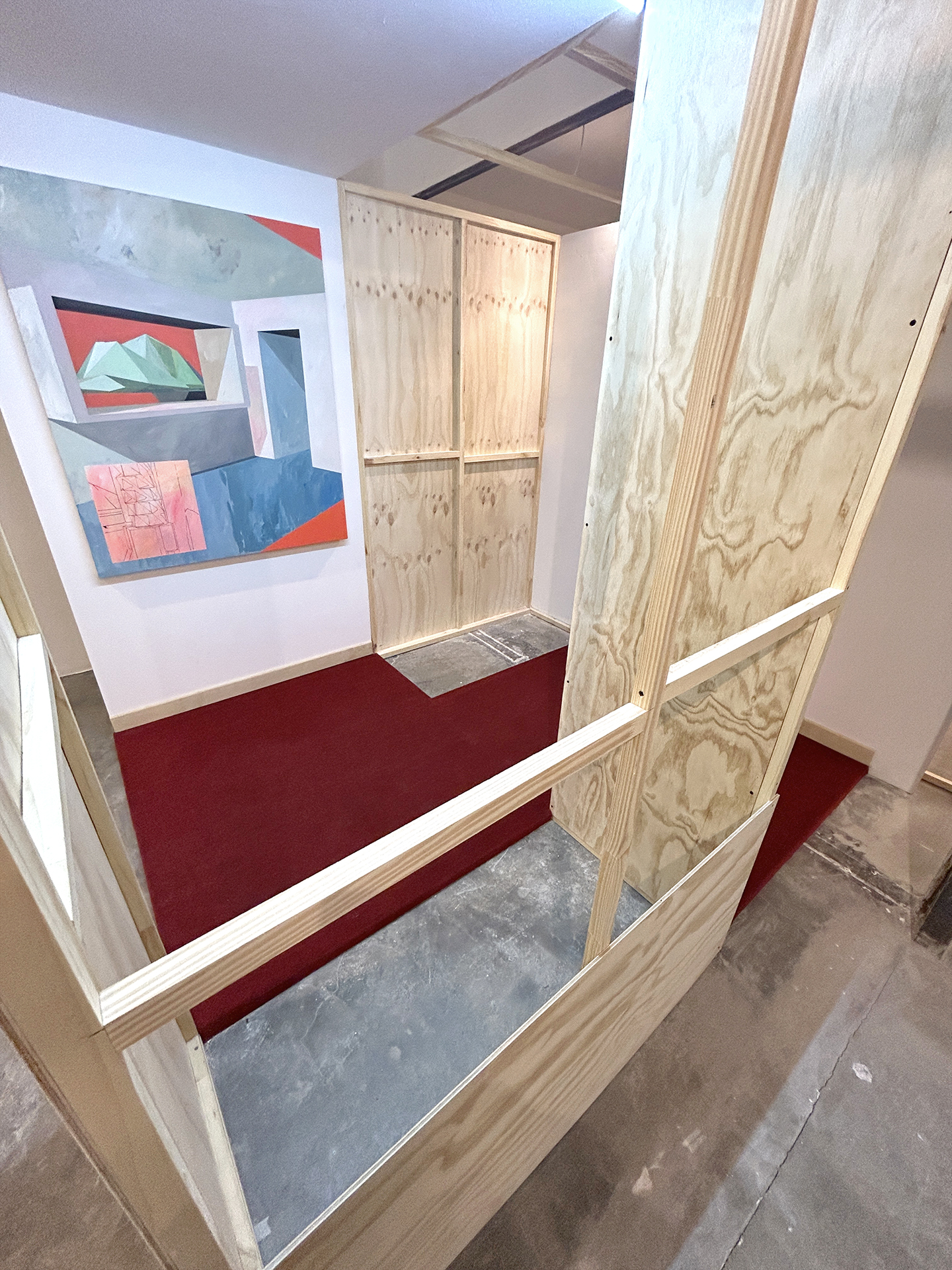
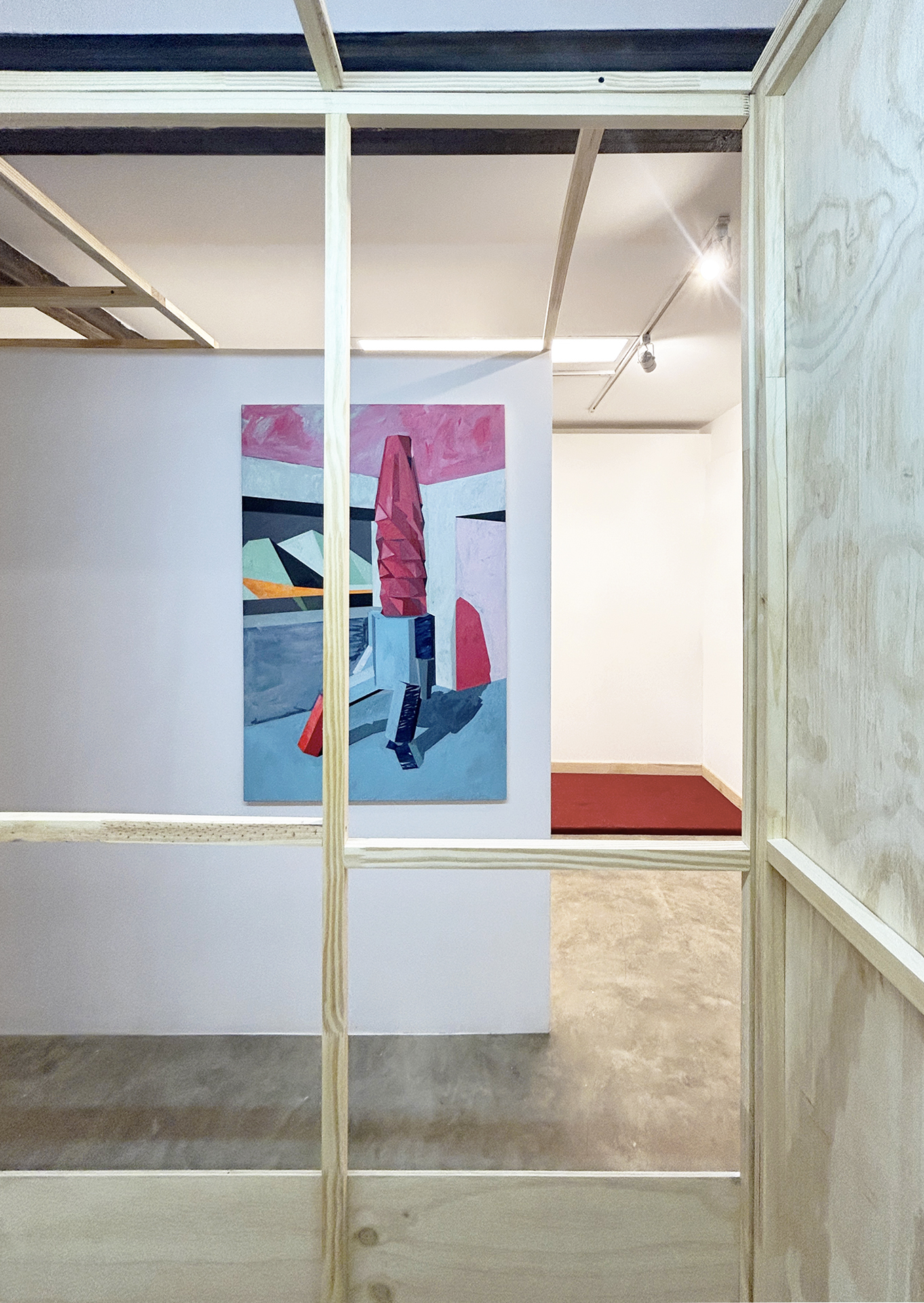
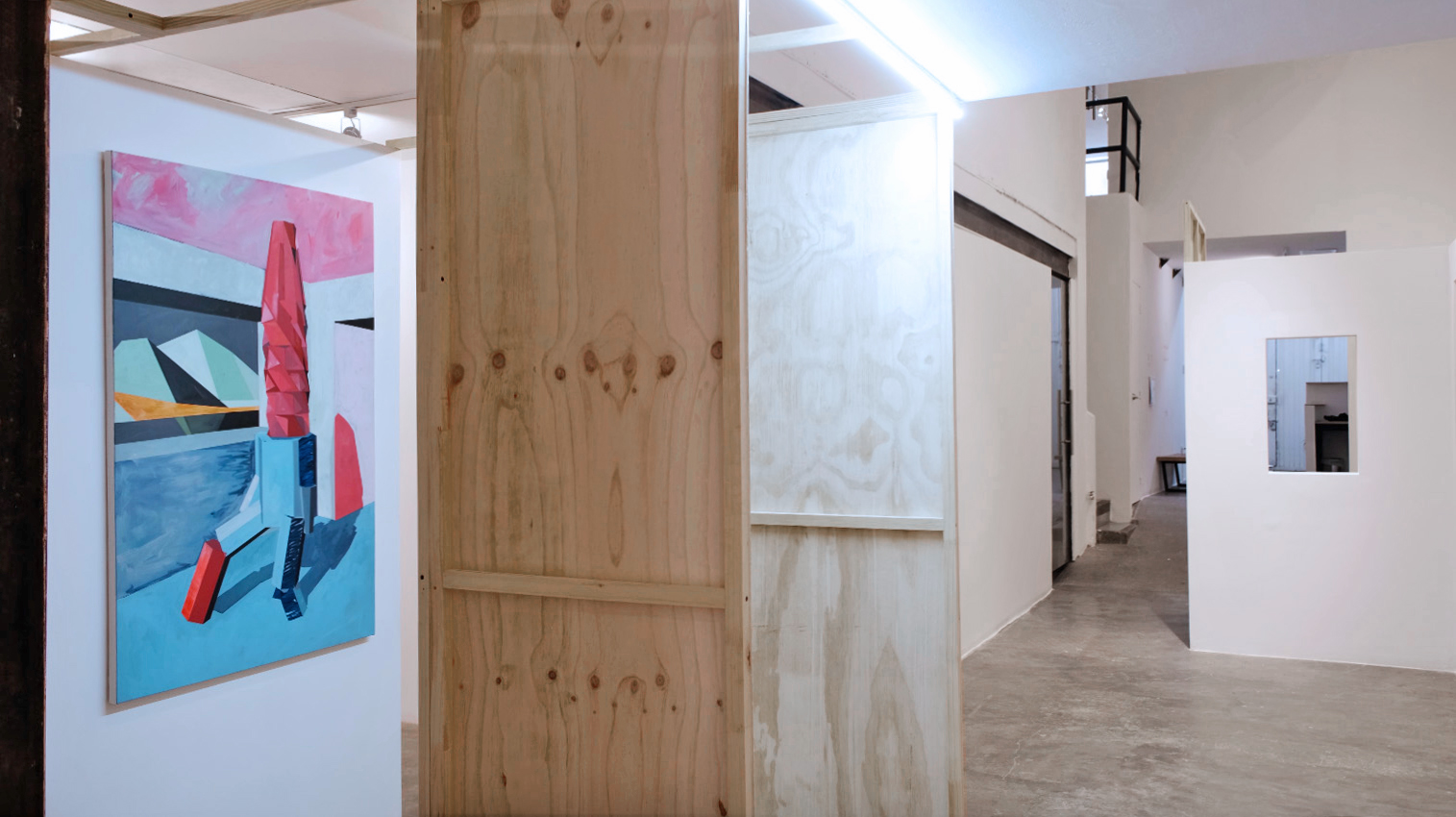
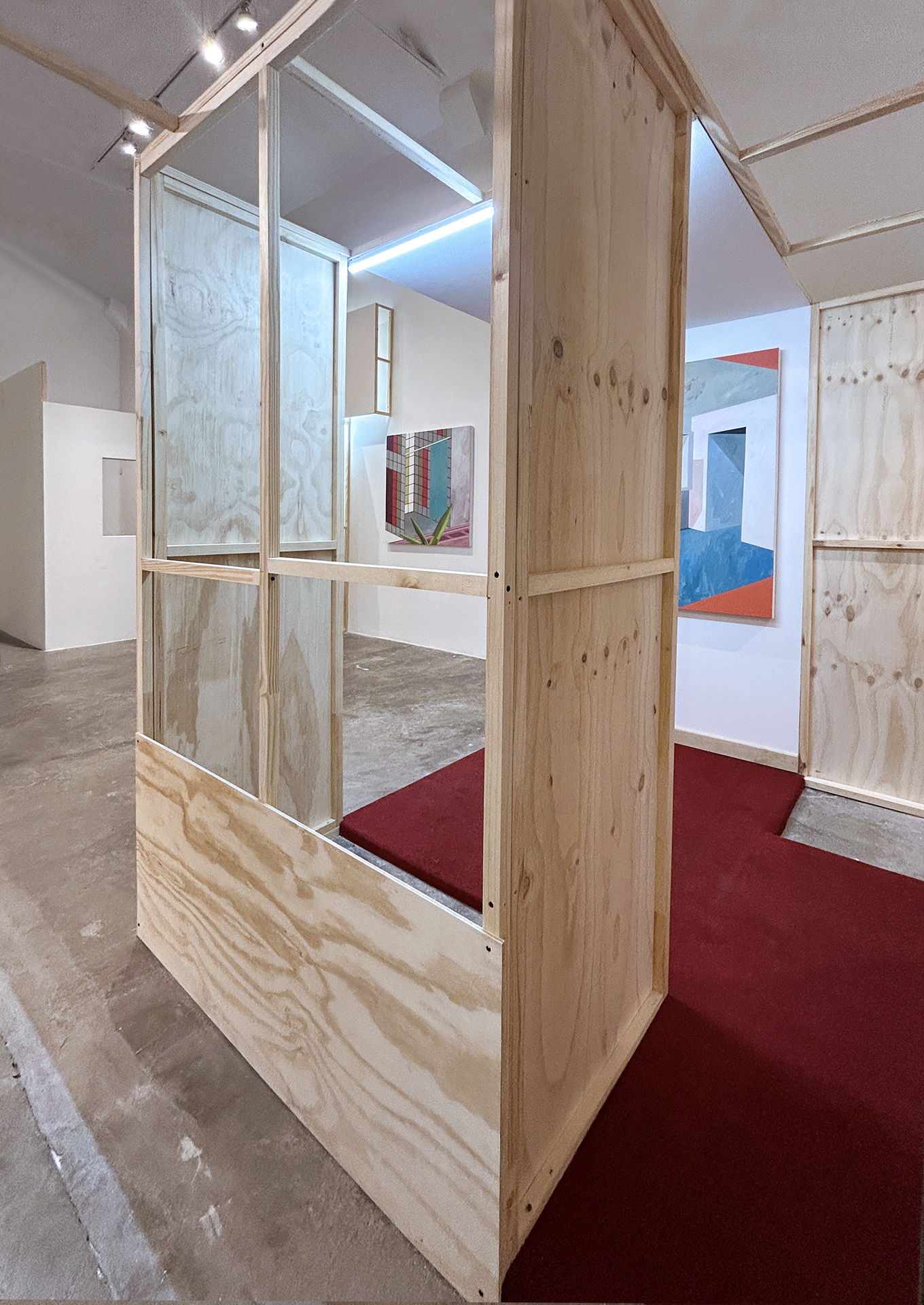
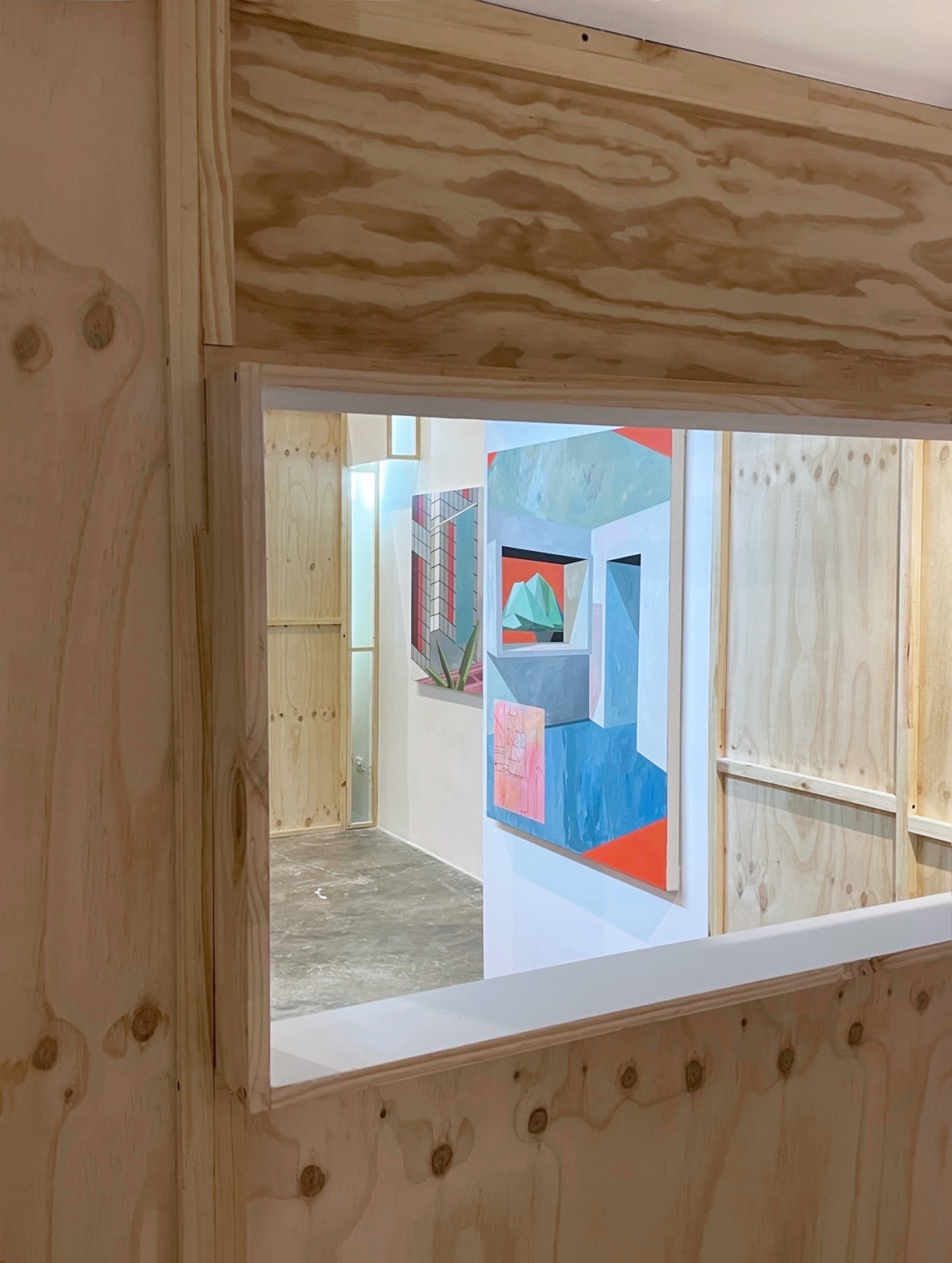
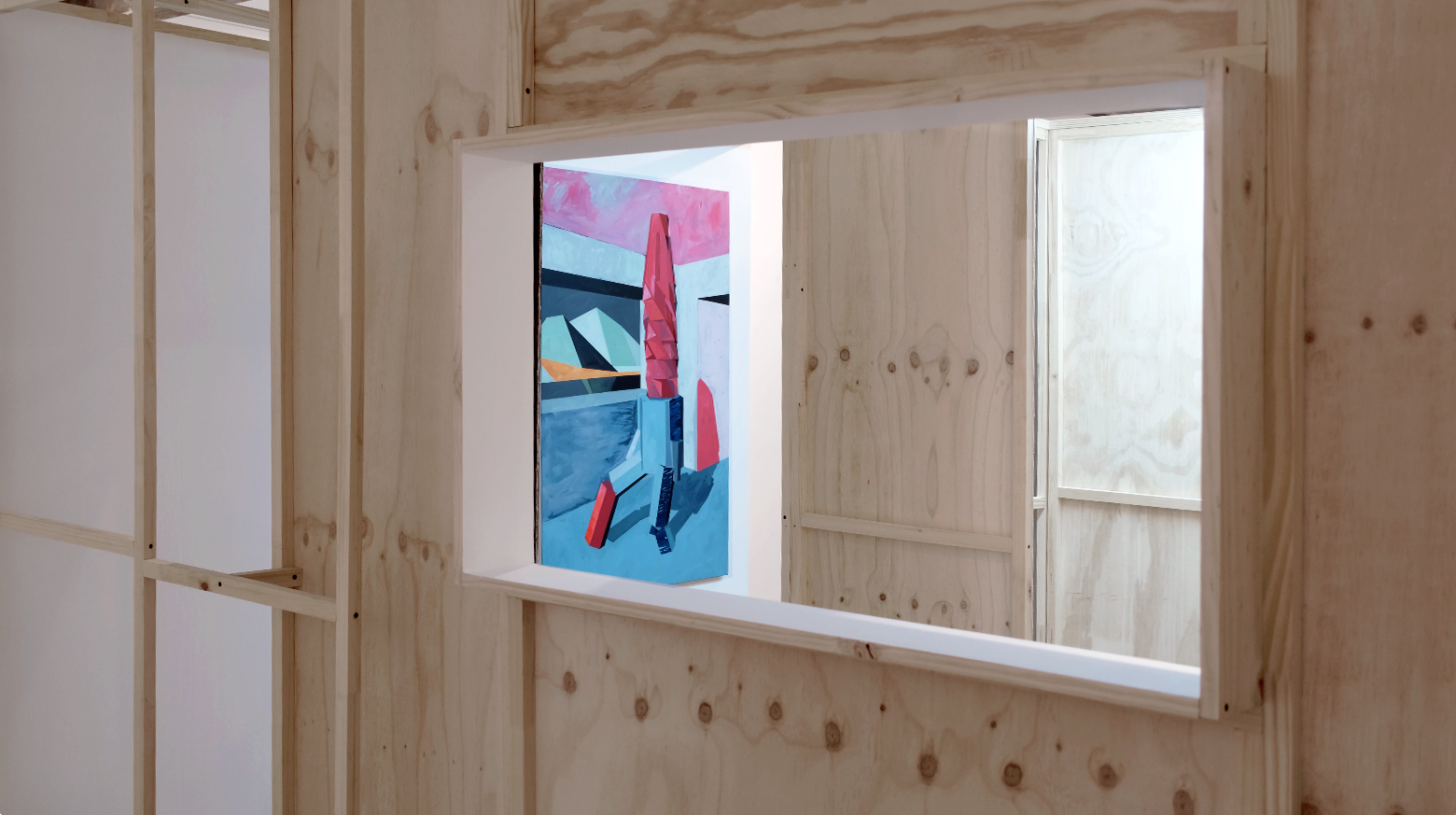
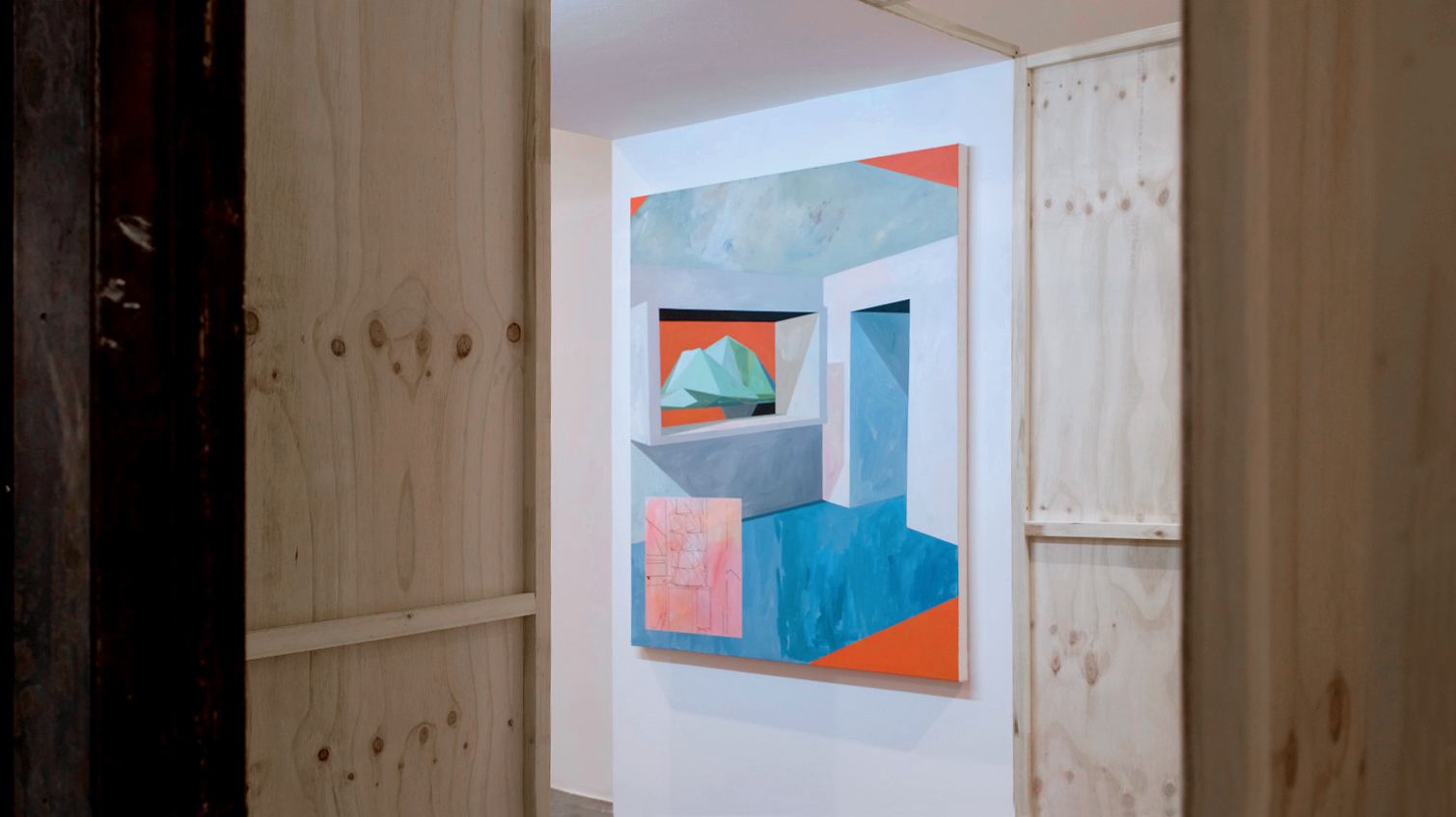
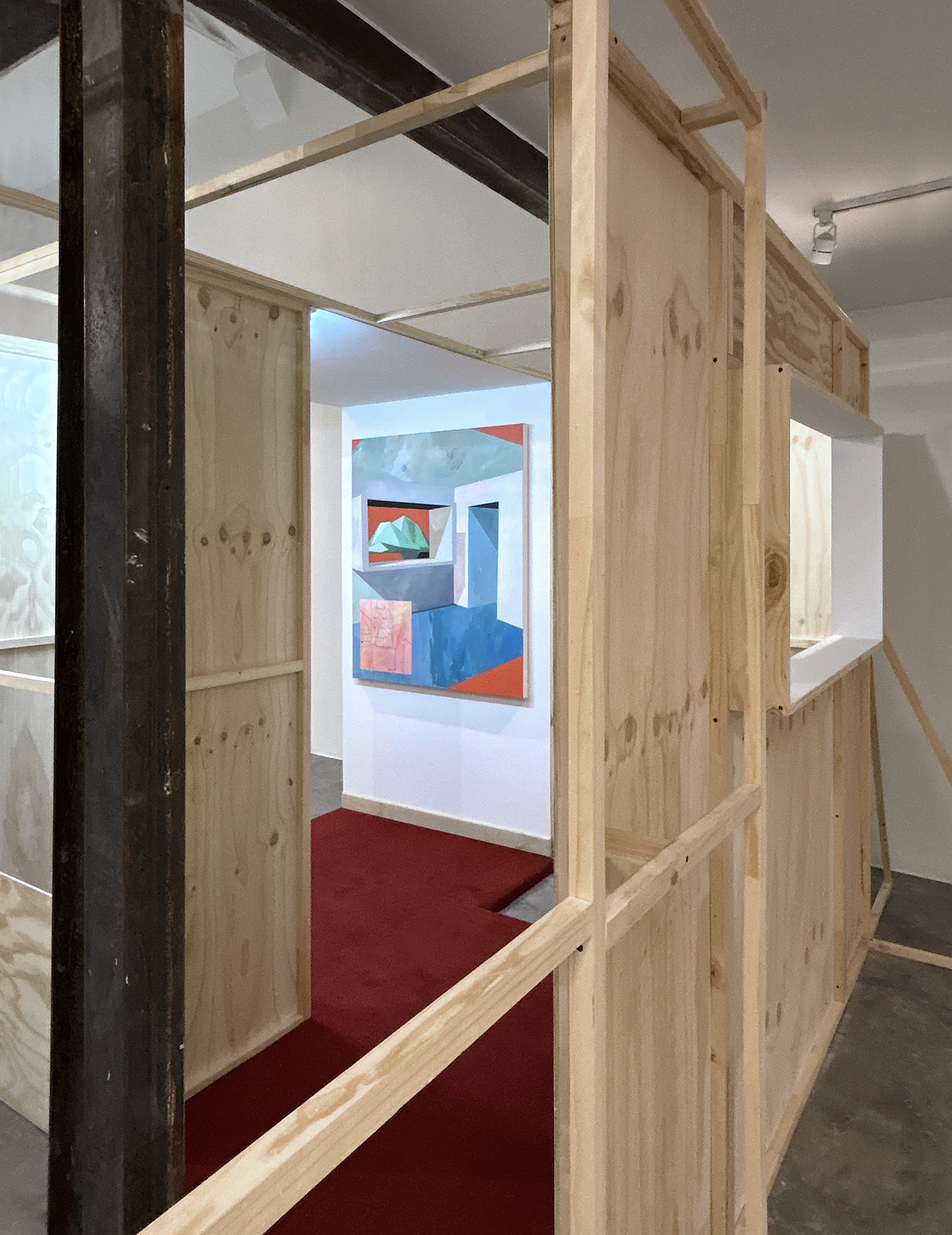
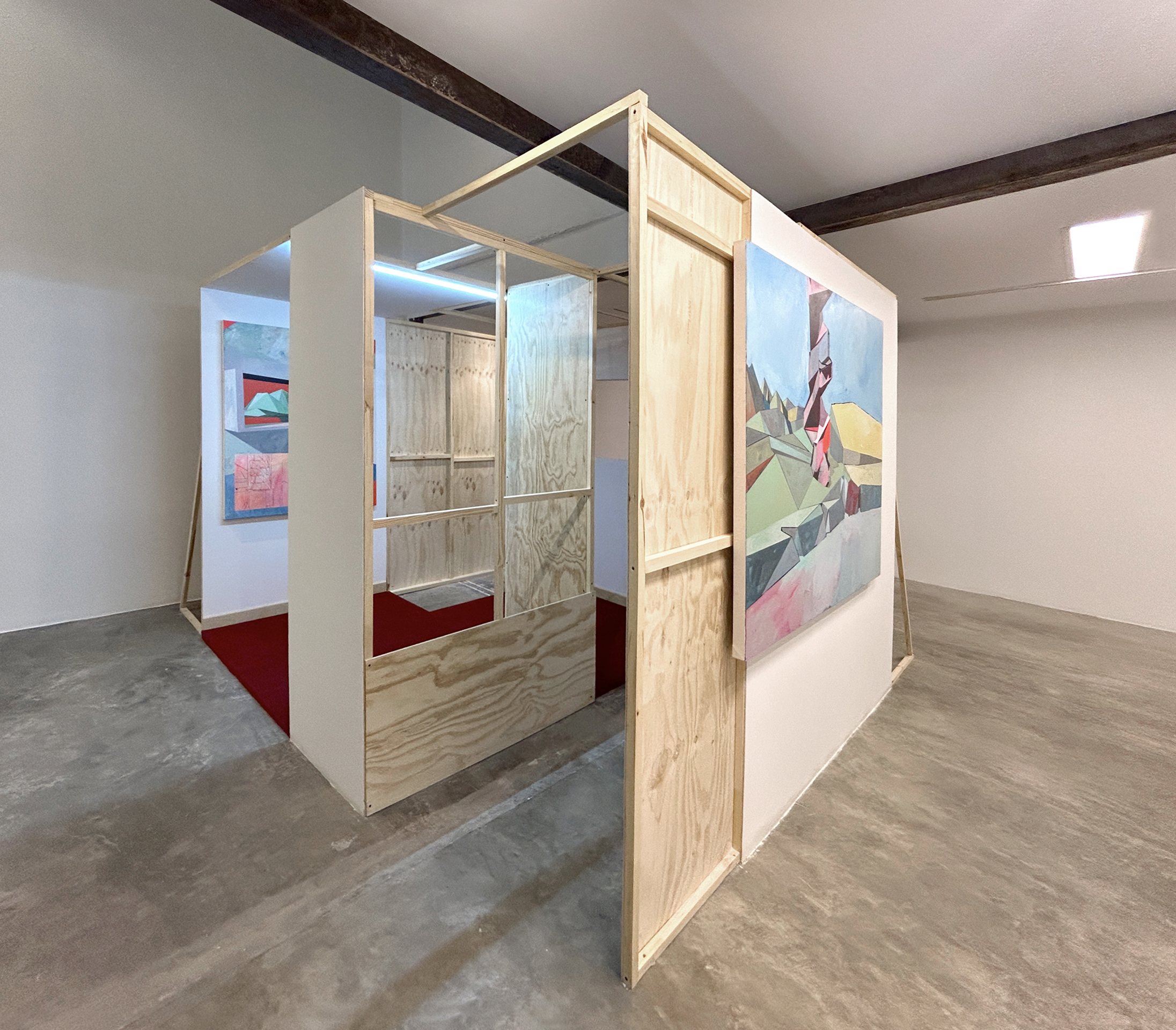
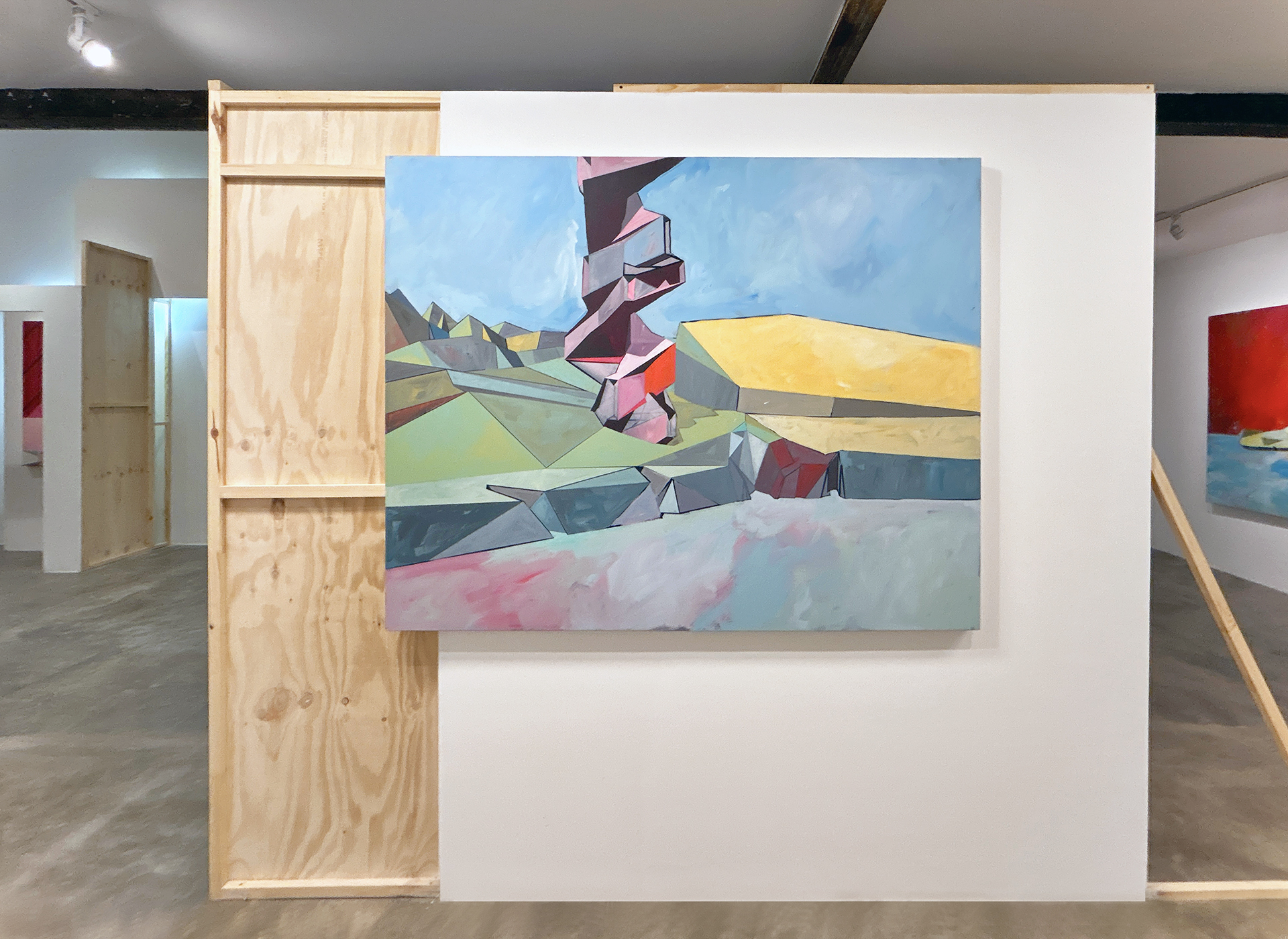
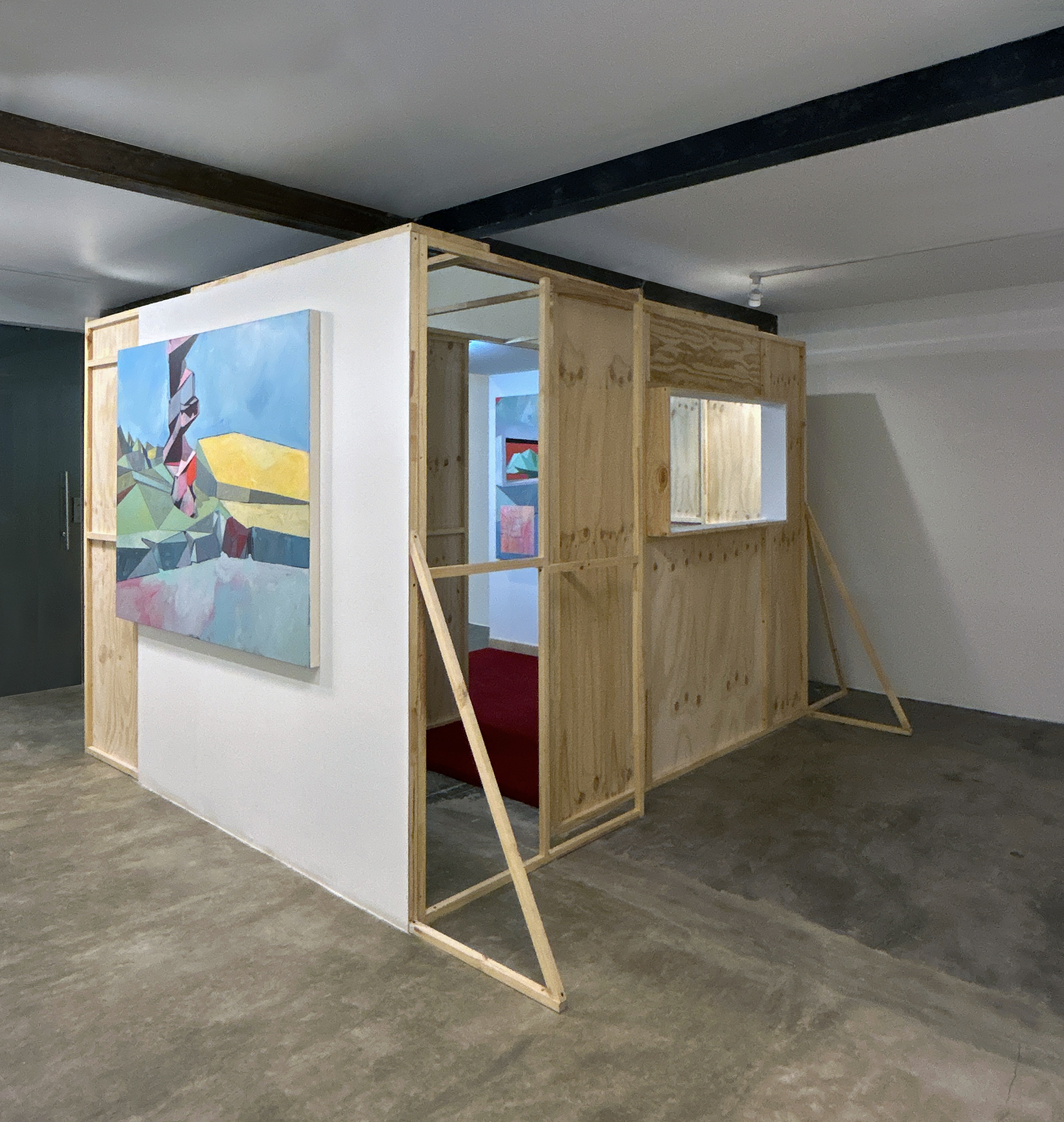
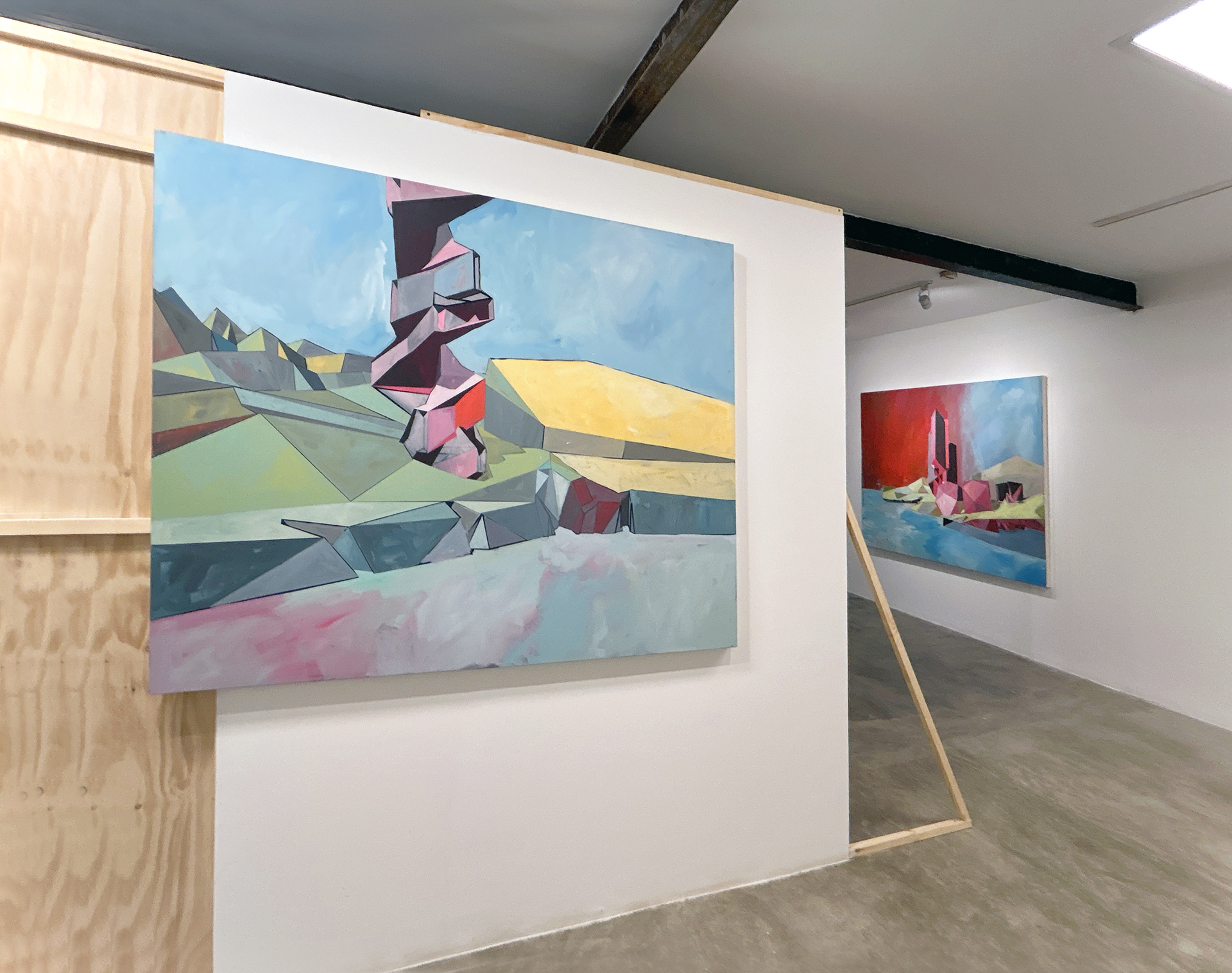
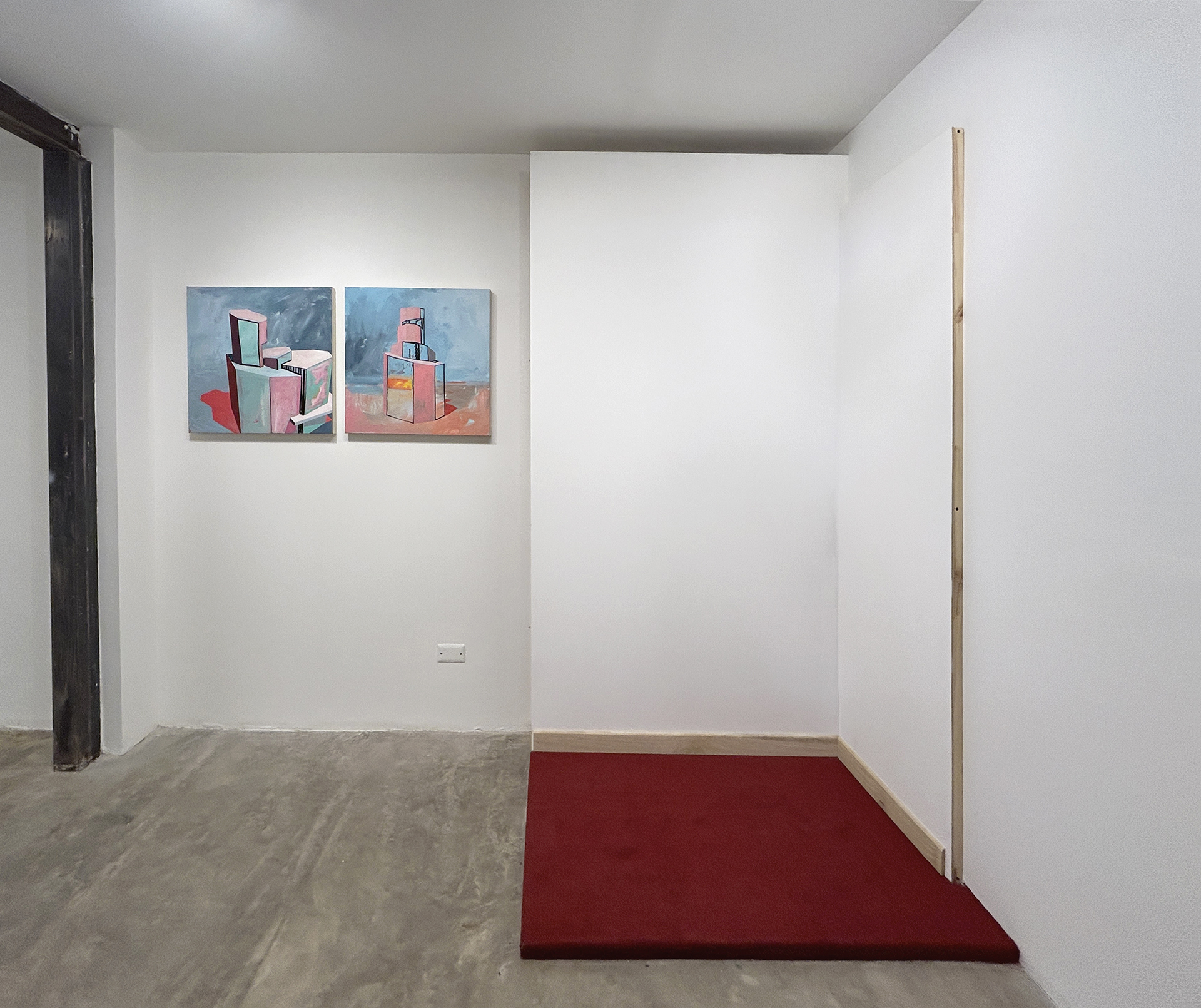
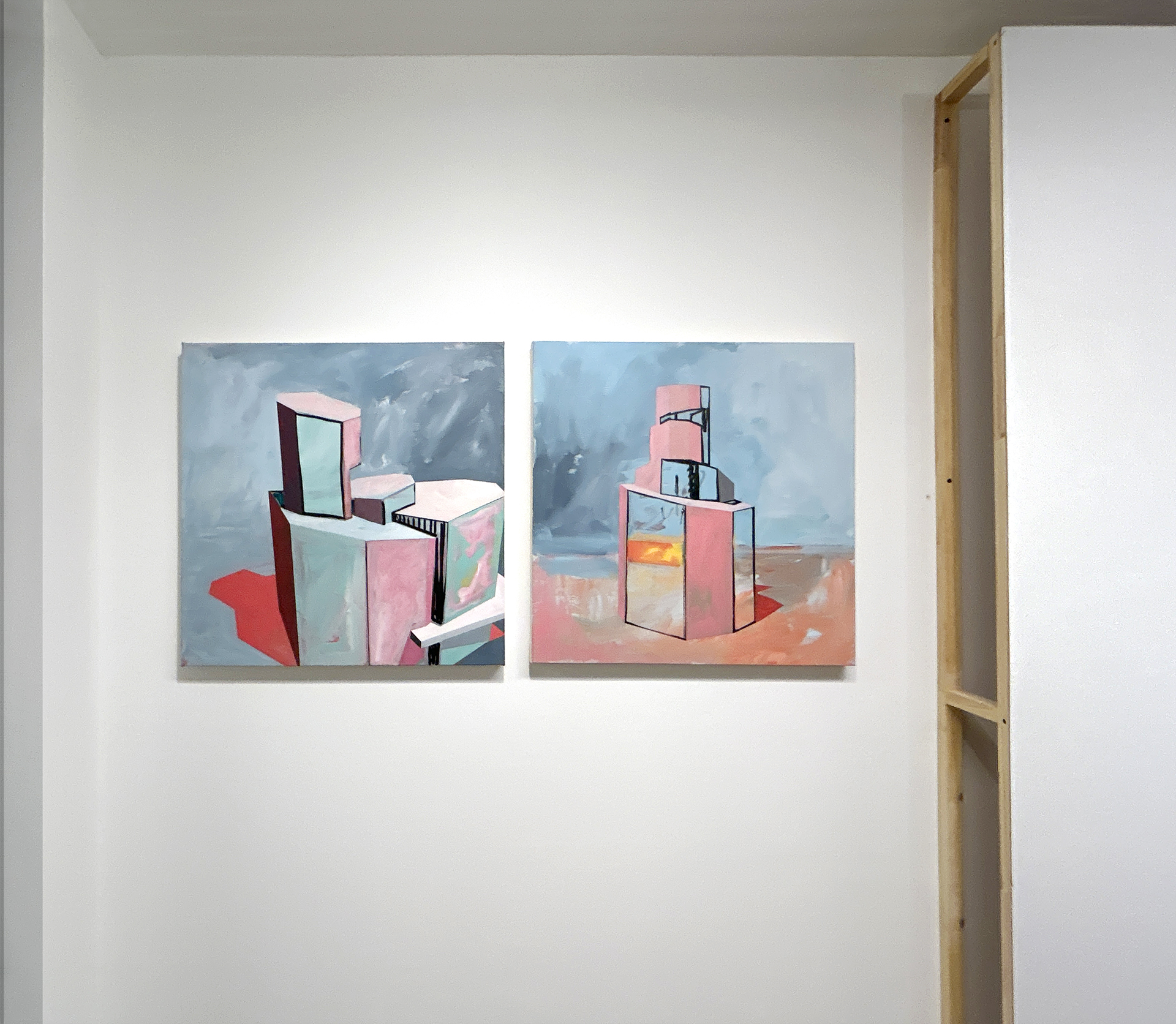
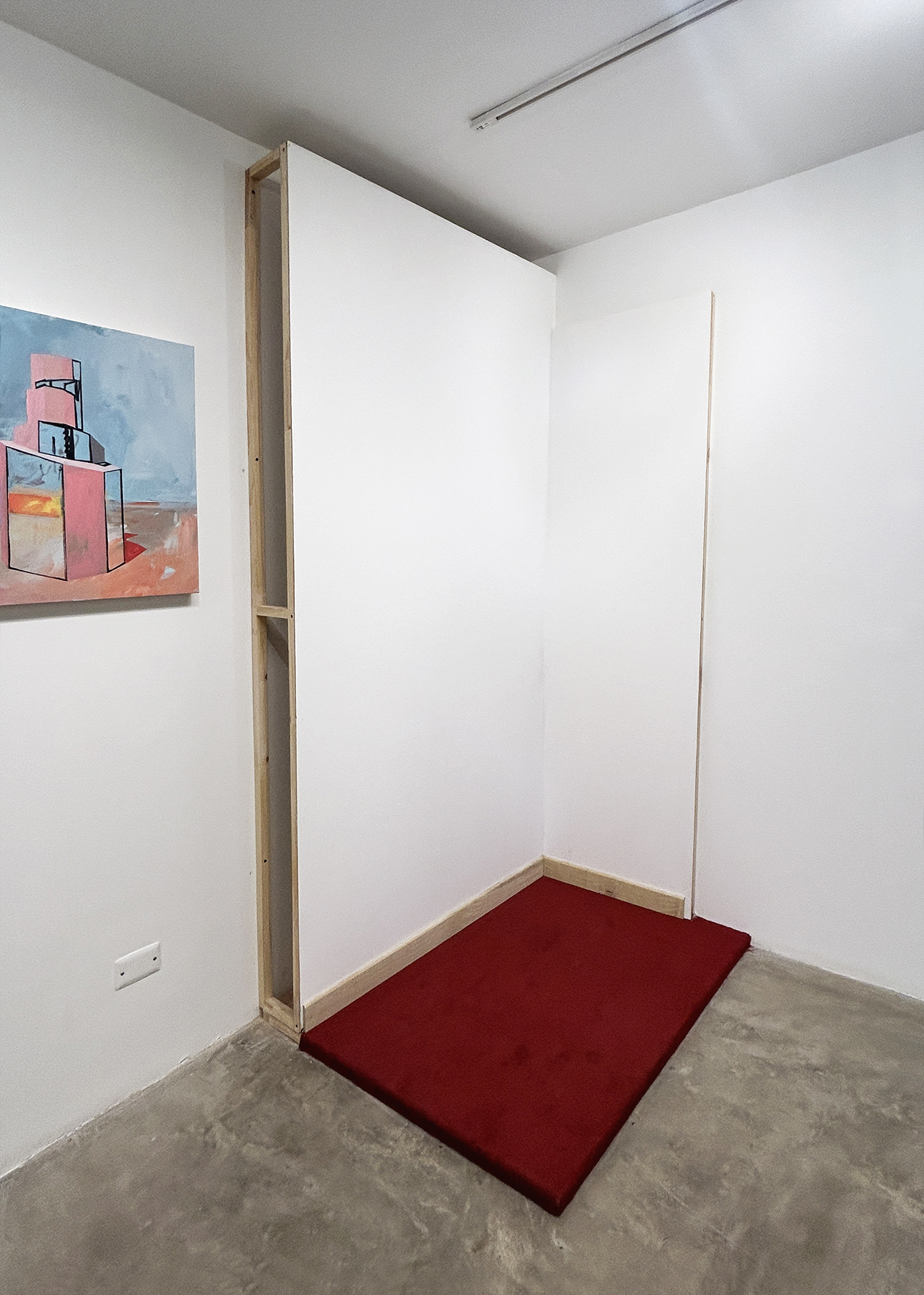
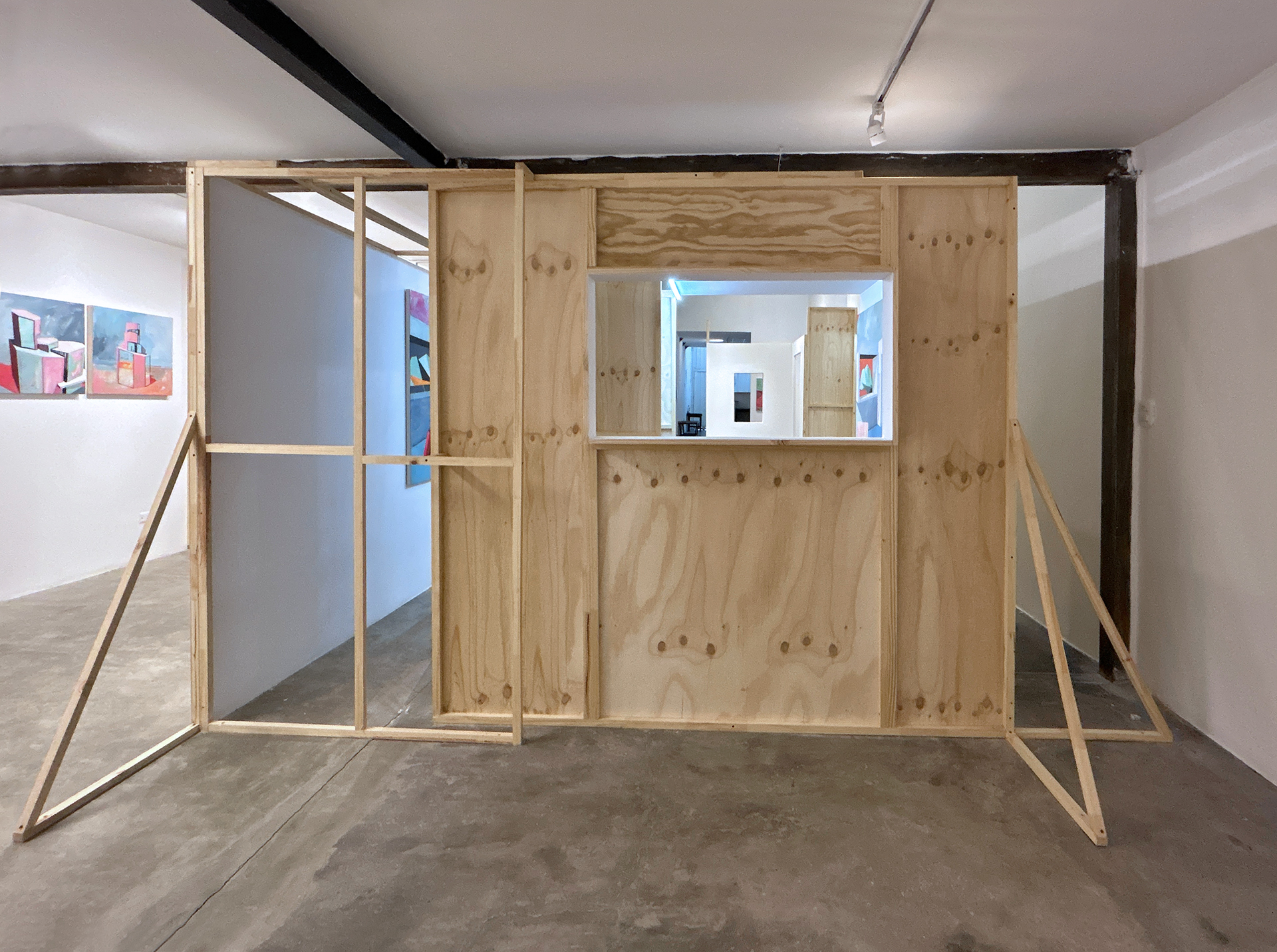
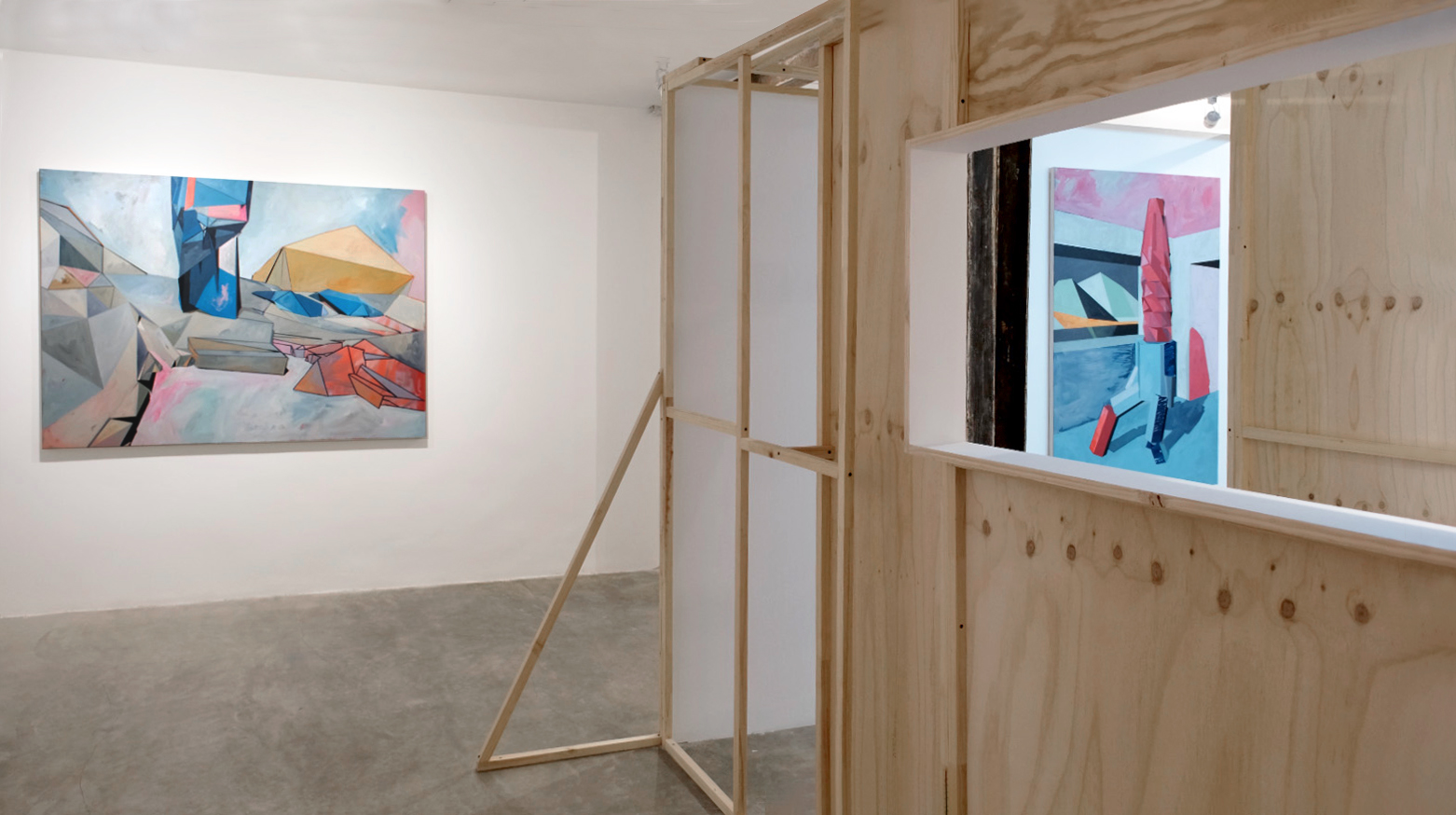
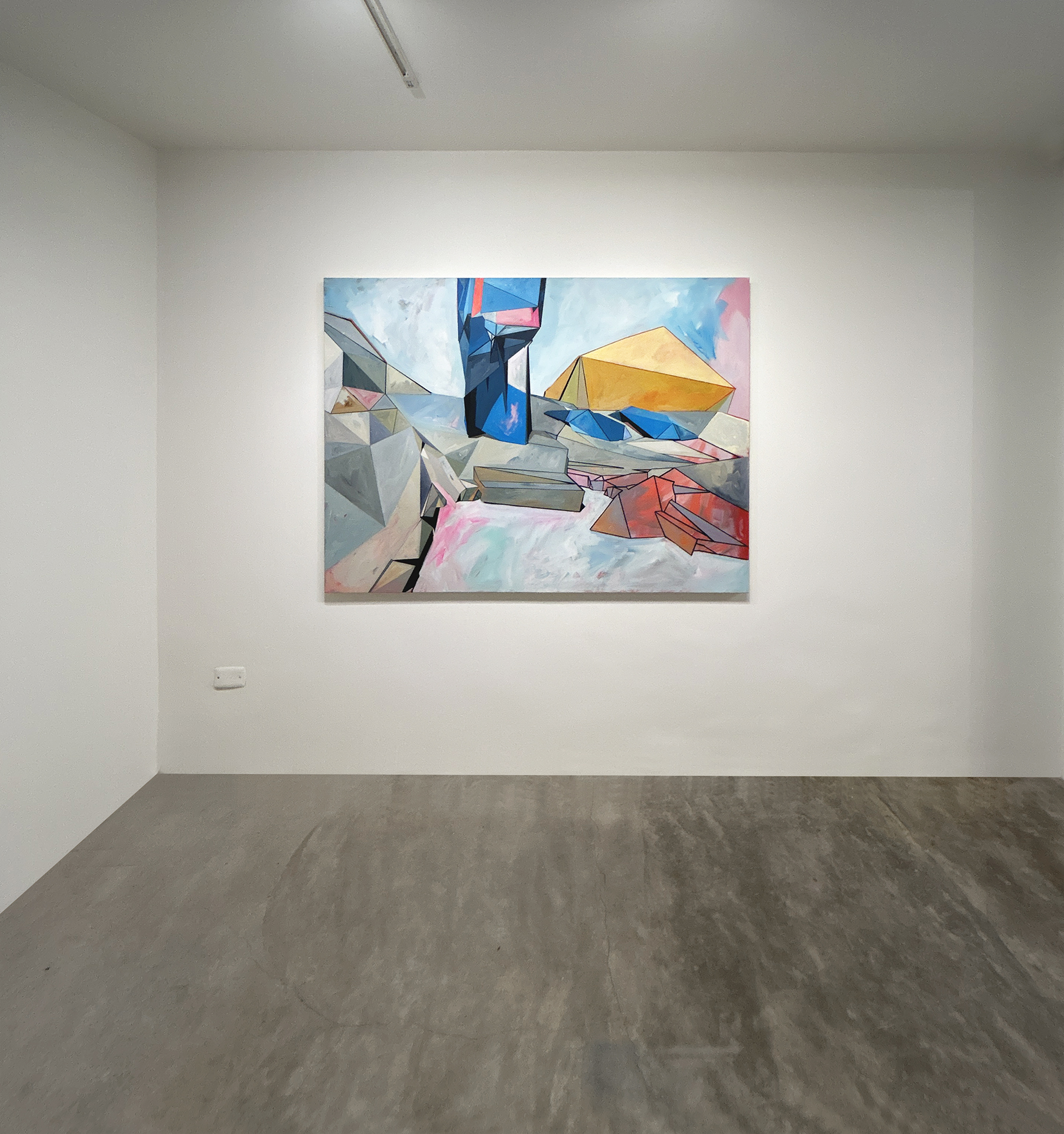
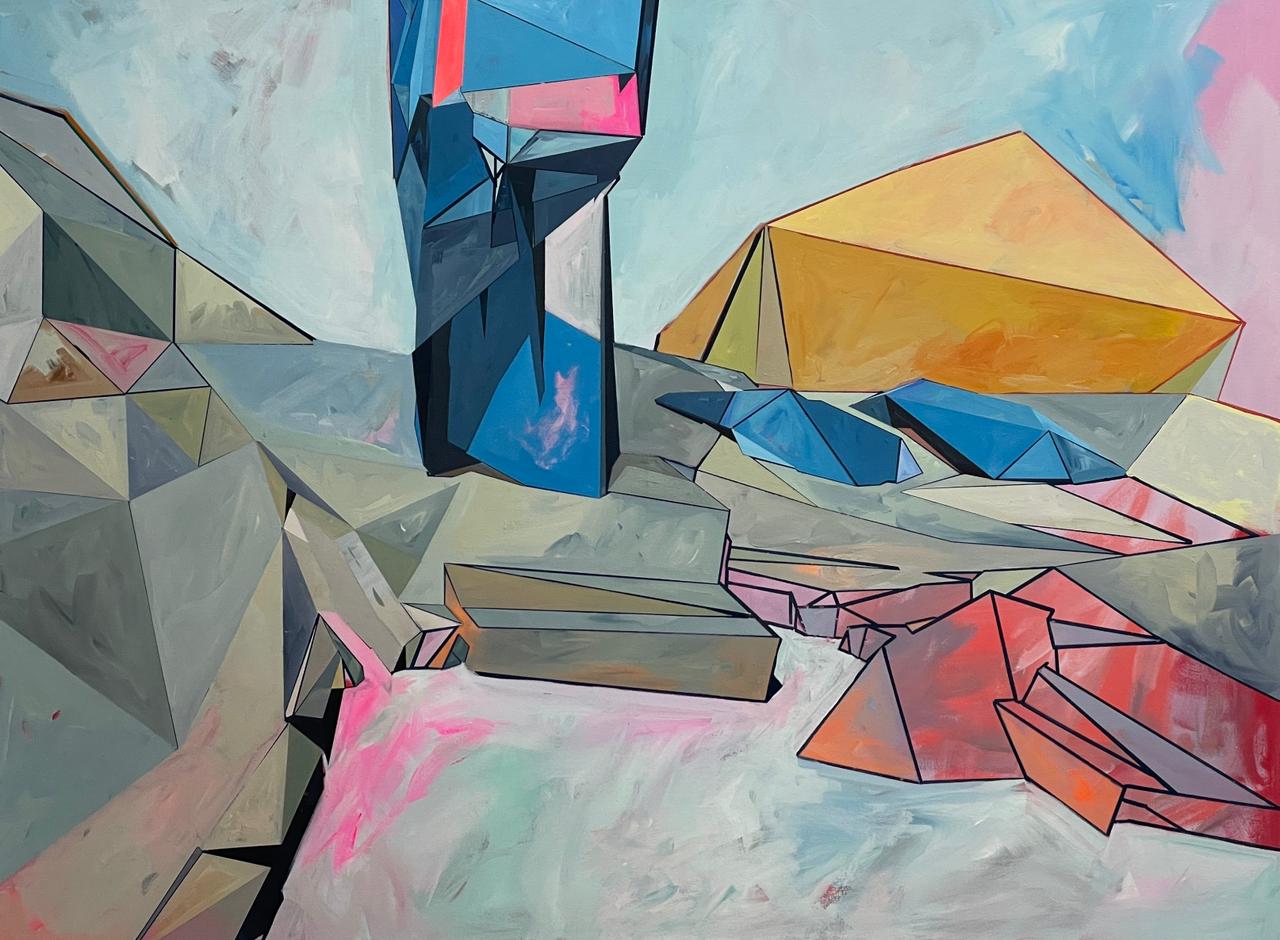
“Q” presents itself as a set built for an unfinished episode of a fictional mystery television series. The gallery space is altered to contain a narrative lost in time; the paintings in the installation become props that gaze upon emptiness — a place that will never be occupied. Fiction once again serves as the point of departure from which Alberto Lezaca constructs his proposition. For this exhibition, Lezaca breaks with structures that have been stable in his work; the pictorial image takes on new forms of behavior, unusual landscapes set against interior spaces heavy with strangeness. Alberto Lezaca creates a collage from different languages; in his installations he crosses painting and digital images with literary and musical temporalities. His work experiences reality as an idea — a reality that is not; his painting no longer seems to observe from the outside the characteristics of a world that appears to exist. In “Q,” the paintings no longer look outward at the world, but rather seem to speculate on the inner world; the improvisation with the internal noise produced by the effort of believing in reality. It is for this reason that Lezaca is drawn to the speculation of pseudosciences, of paraphysics that speak of unknown energies, of cartoons and their impossible physics, of nameless matter that communicates mind to mind outside of language. “Q. Everything seems to be what it is not” is the name of the lost episode of the series. Apparently only austere sketches of the set and extensive descriptions of the prop paintings survived — of the locations where the main character, the only relevant one in the series, had been; all other characters seem to be of no importance. The efforts to produce the television series “Q” were delirious; the first episode was meant to contain all seven episodes of the series. Some sketches reveal the absurd amount of time dedicated to determining how long it would take to plan and complete it. Only a fragment survives, with countless descriptions of the props and almost no clarification about the main character, who is nonetheless present in every minute that would have been filmed of “Q.” Alongside the sketches, a page appears with a blurred text — a description by someone who, it seems, had been following accounts of what happened with “Q.” —I have been to the seven places where the main character has been. No one ever visited them; it is not possible to know where they are. It seems he can be in several of these places at once. They look like familiar landscapes, but they have strange buildings — I don’t know whether for communication, condensation, or entropy. These rest on a kind of frequency that extends across the entire field. One structure lies beneath the surface, others interrupt the horizon, others I cannot describe; they are contained, they seem like strange familiar spaces, all at once. The main character was a telepath, but I don’t know with whom or with what he communicated. Everything was forgotten over time. The first episode, which contained all the episodes of the series “Q,” was lost. I don’t know if it was ever finished. There were a few other characters of no importance, all of them hypnotized, as in that film from nearly the end of the last century. For the episode, they would build a small set with several prop paintings — the paintings that spoke of “Q.” The frequency field would have to be reconstructed in a video system. All that remained was a drawing of the projection of a model, a prototype of the frequency — that inaudible and strange noise I perceived in every place I went to— – Camila Corredor Echeverry
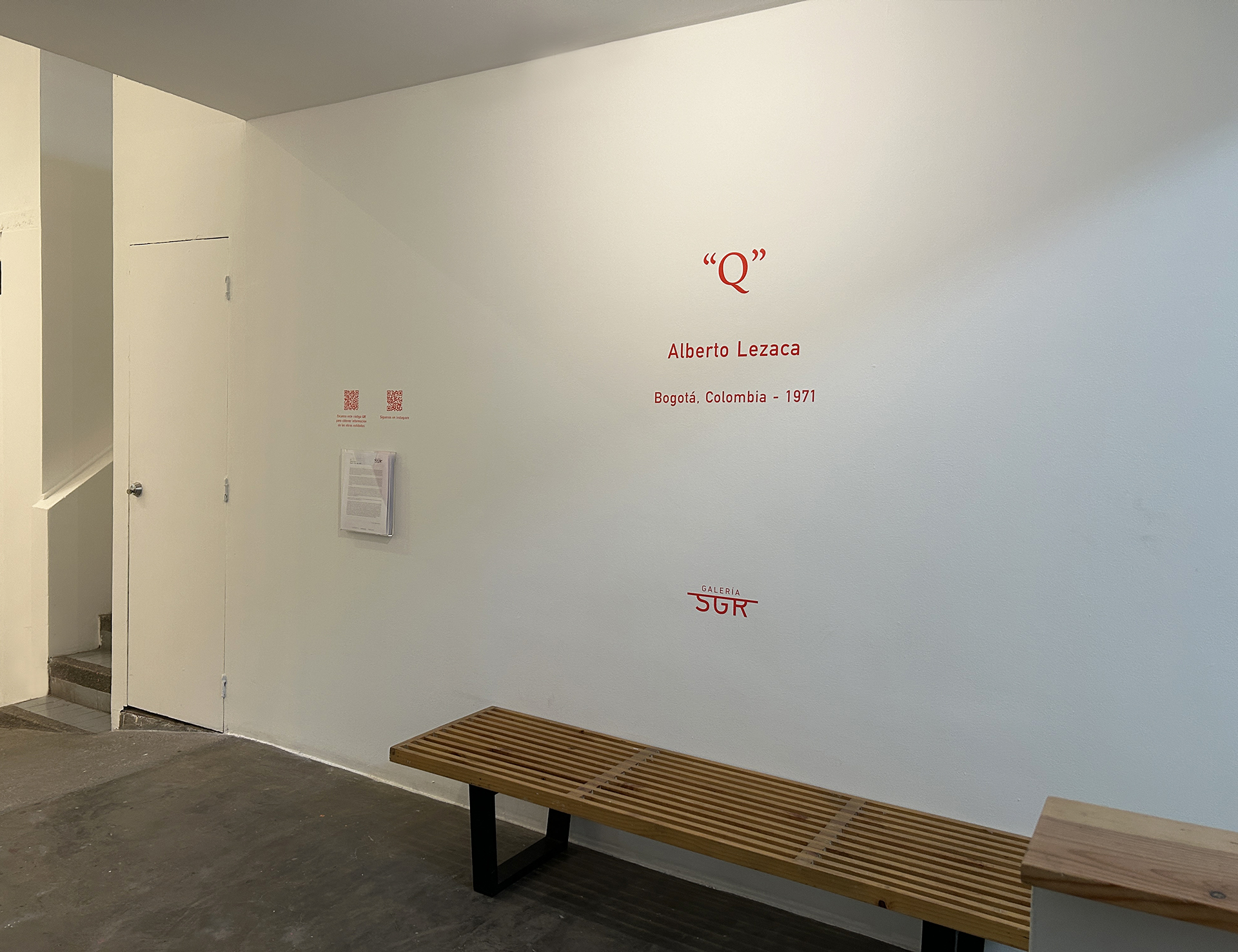
“Q”
2026
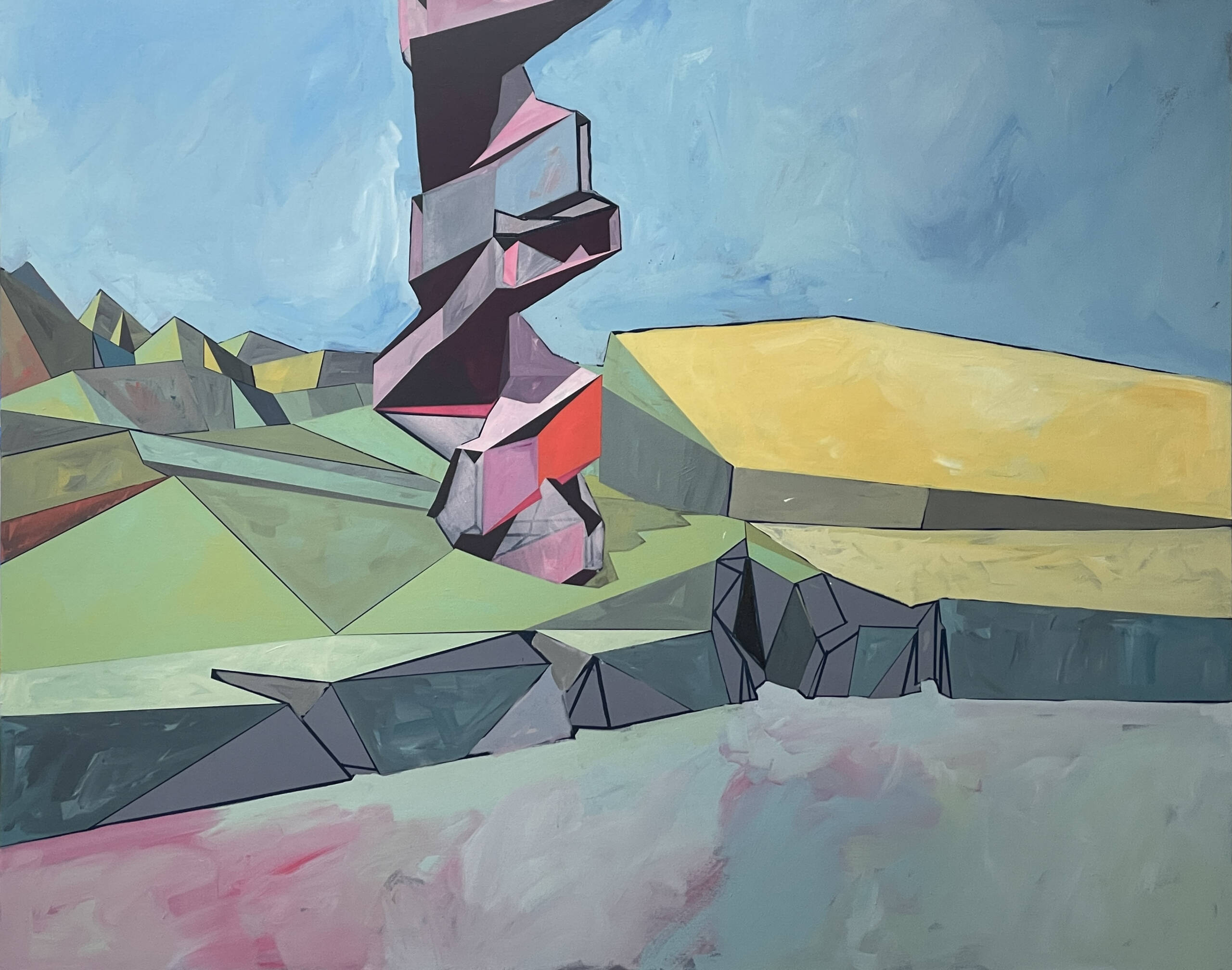
(METAZONA) CENTRO PARAFÍSICO, 2026
Acrílico sobre lienzo
120 x150 cm
Acrílico sobre lienzo
120 x150 cm
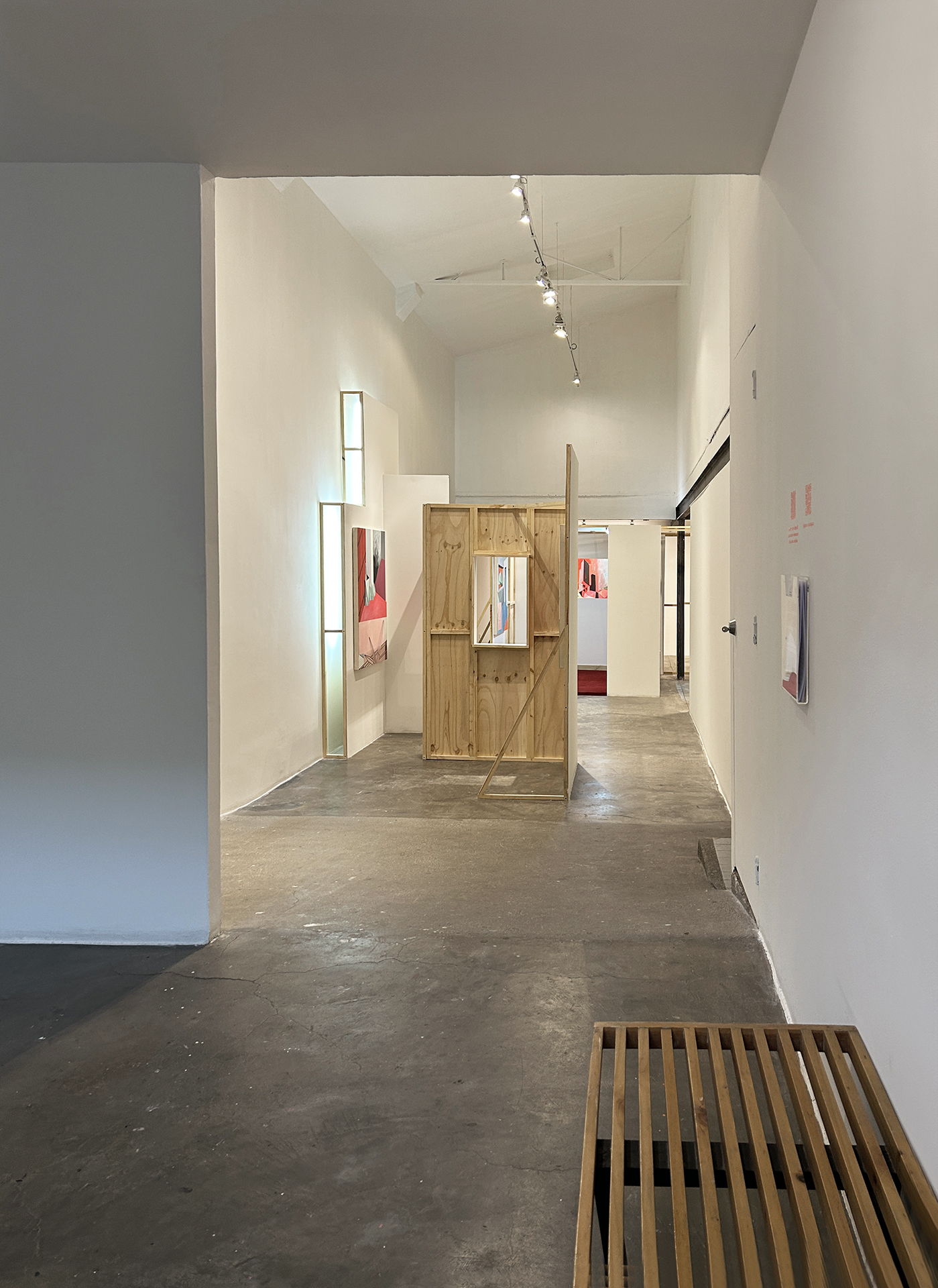
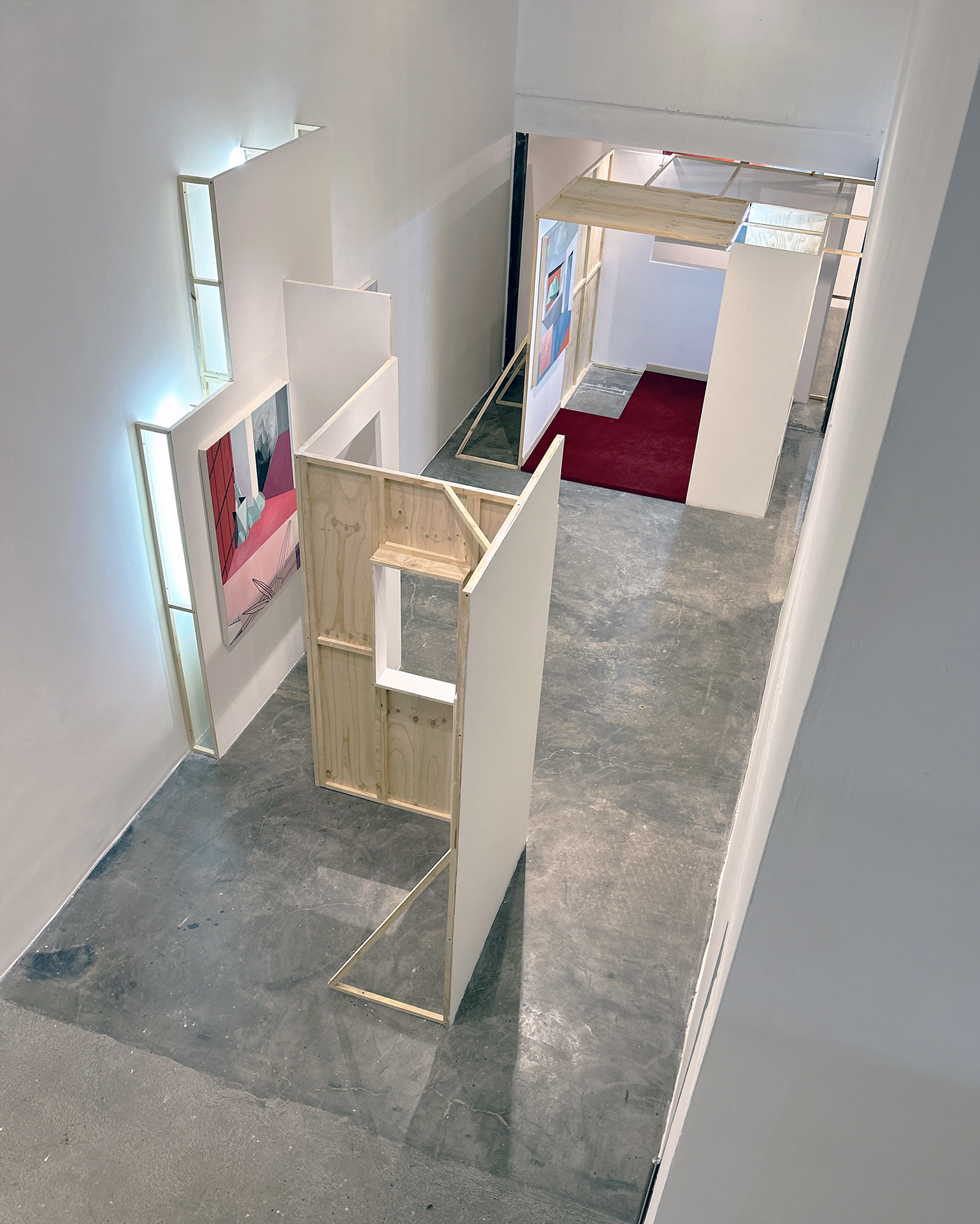
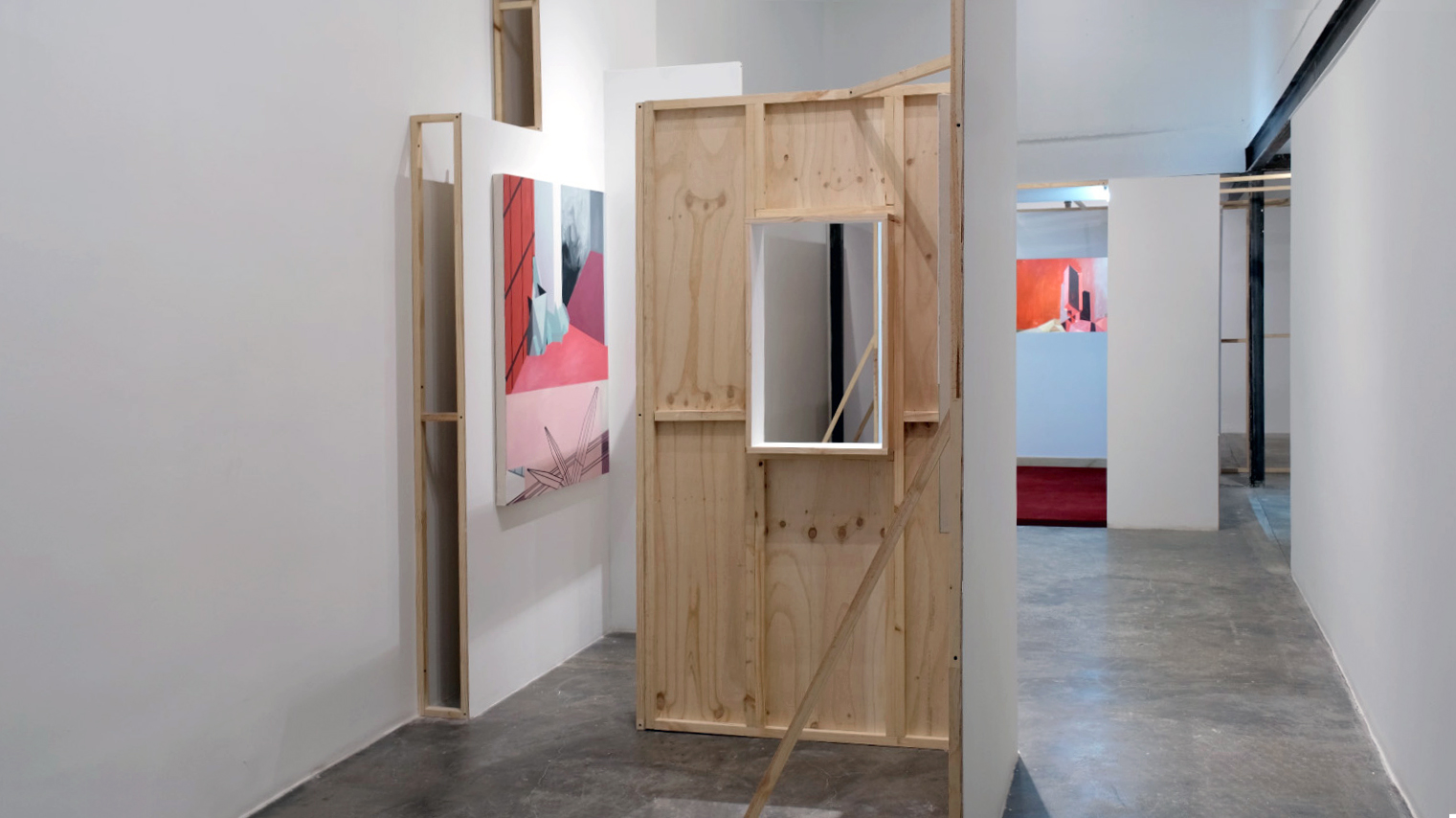
"Q" 2026 (installation view)
"Q" exhibition, SGR Galería, Bogotá
"Q" exhibition, SGR Galería, Bogotá

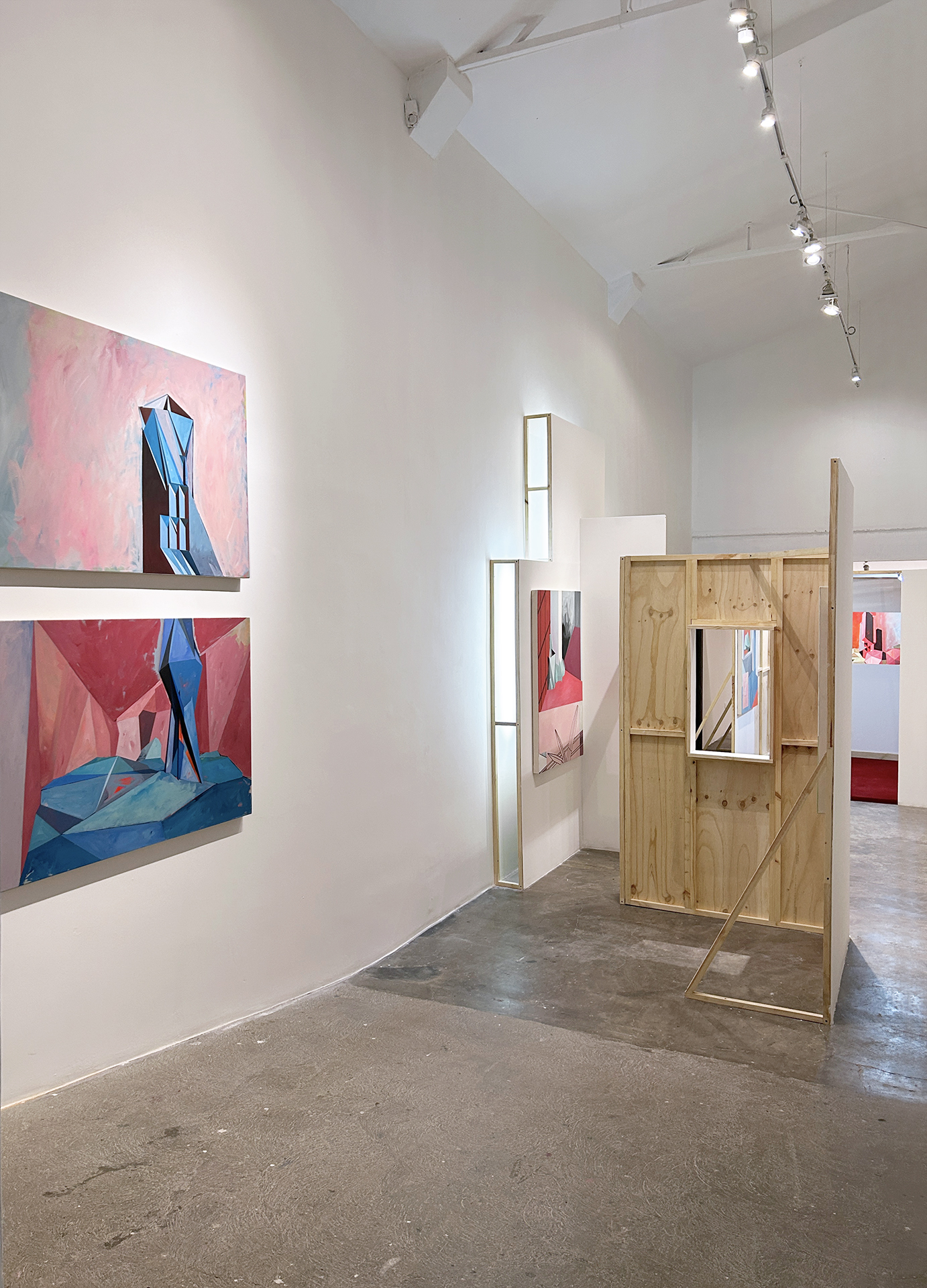
Unbalance, 2026
Acrílico sobre lienzo
80 x 120 cm
Acrílico sobre lienzo
80 x 120 cm
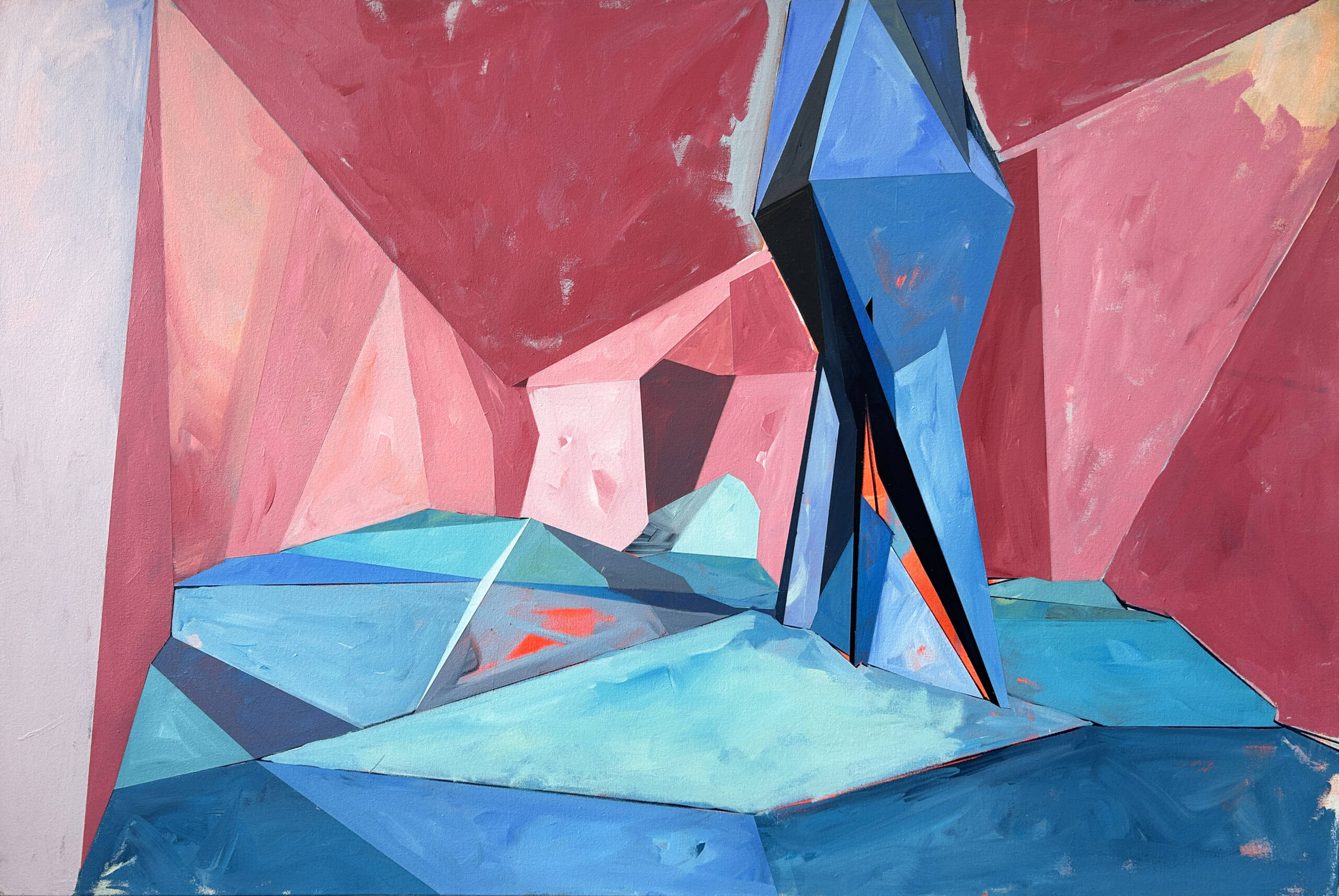
Unbalance, 2026
Acrílico sobre lienzo
80 x 120 cm
Acrílico sobre lienzo
80 x 120 cm
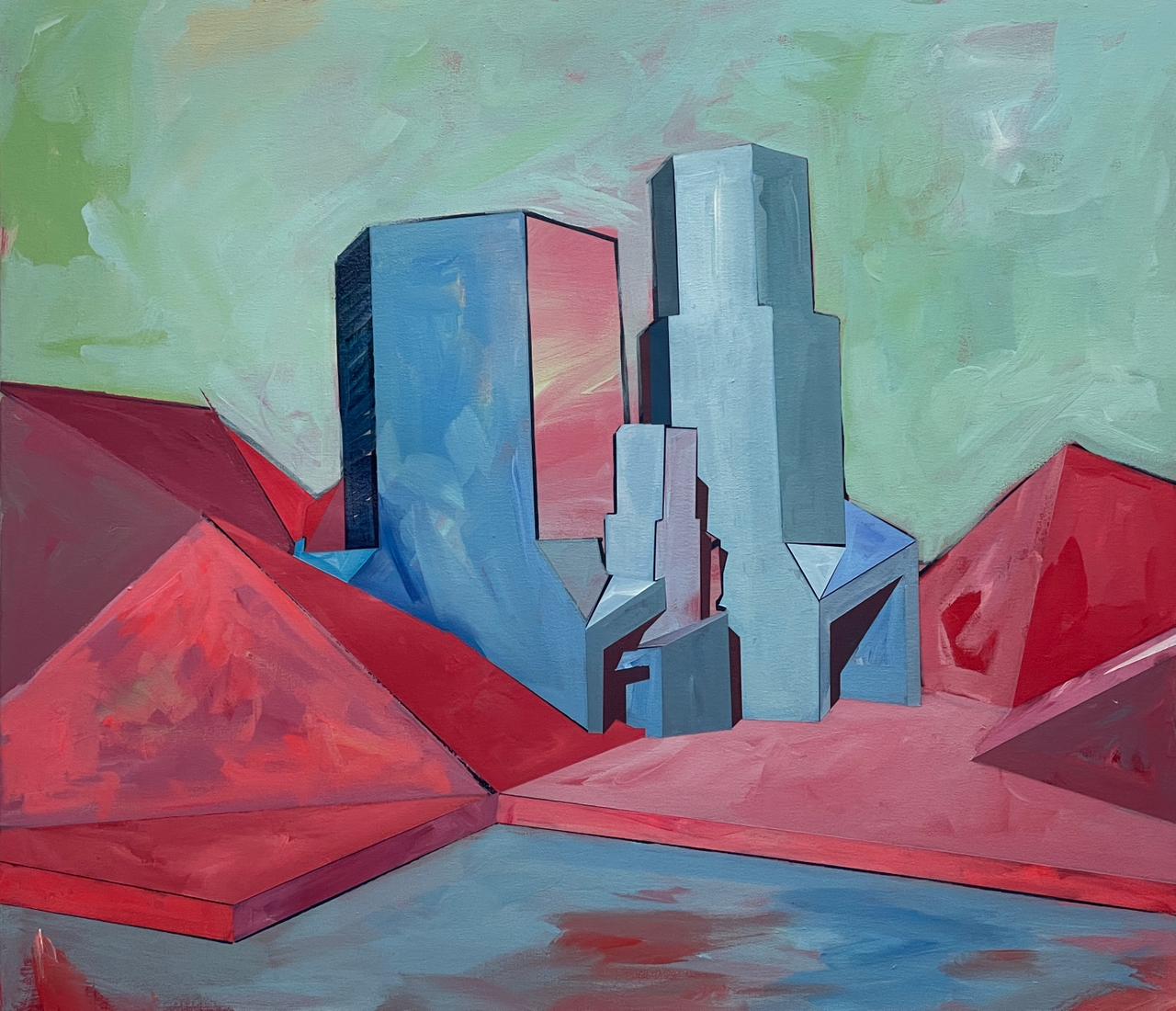
IMPRESIONES DE AFRICA, 2026
Acrílico sobre lienzo
70 x 80 cm
Acrílico sobre lienzo
70 x 80 cm
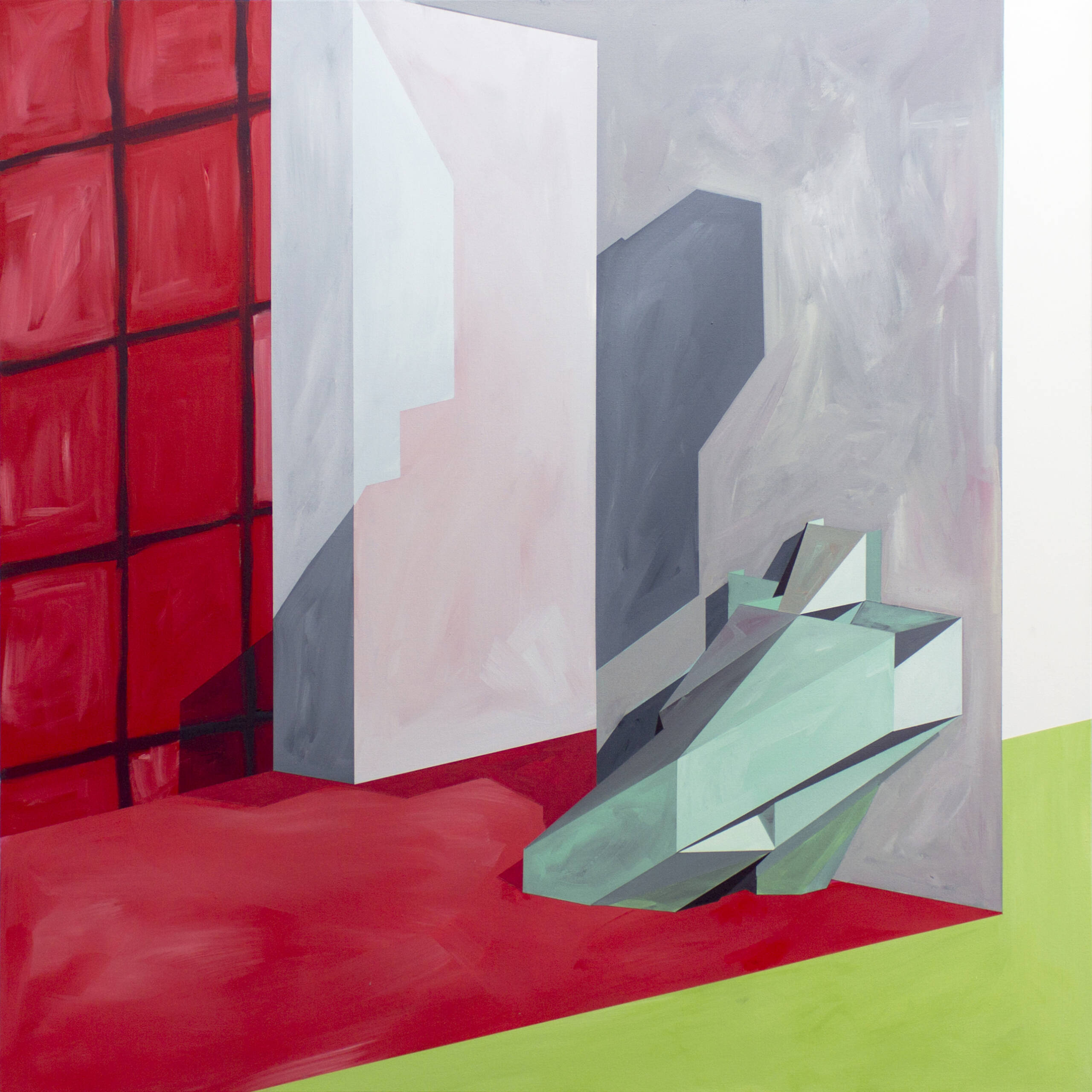
FICCIÓN CIENTÍFICA, 2026
Acrílico sobre lienzo
100 x 100 cm
Acrílico sobre lienzo
100 x 100 cm
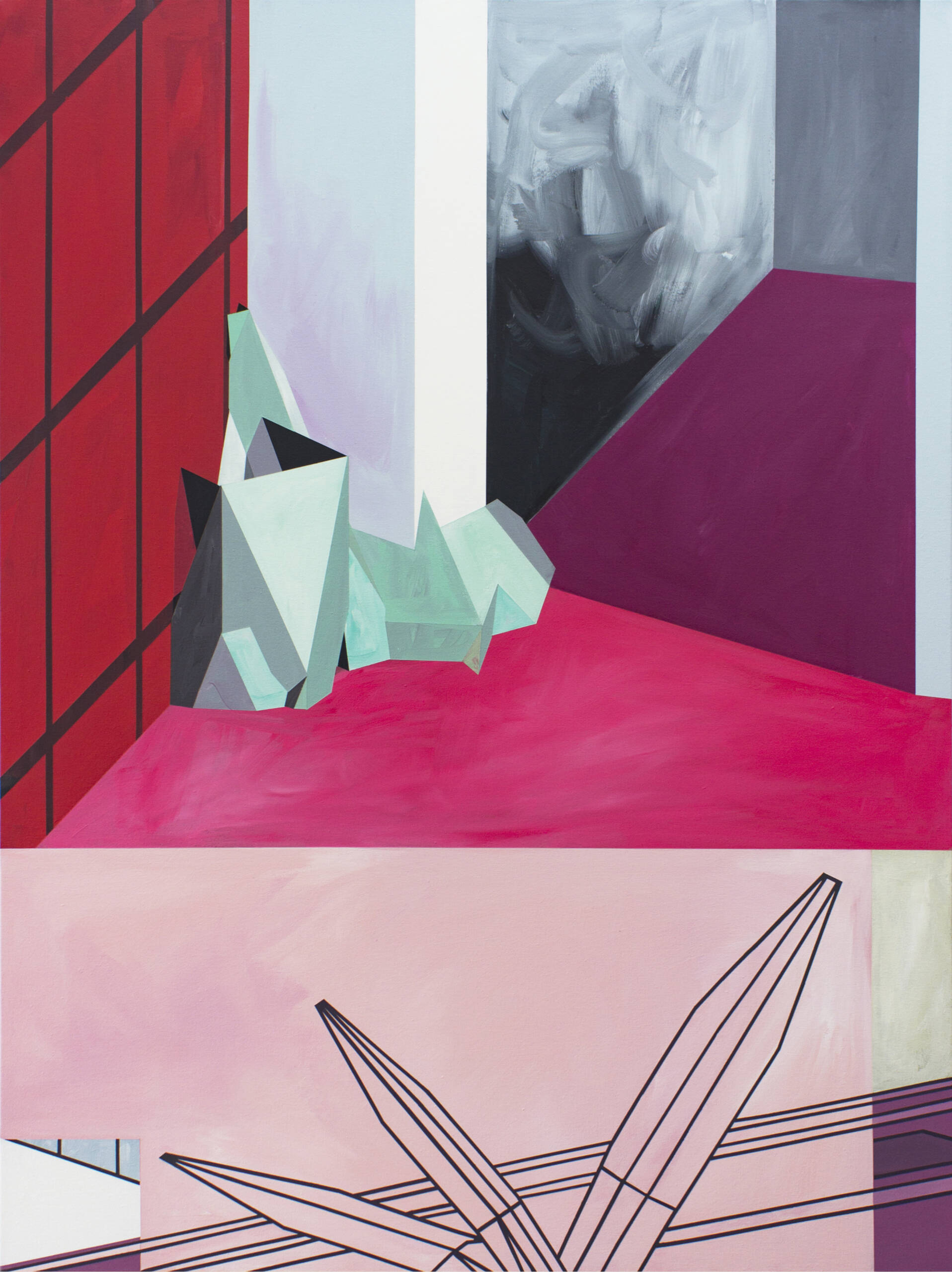
PATAFÍSICA, 2026
Acrílico sobre lienzo
120 x 90 cm
Acrílico sobre lienzo
120 x 90 cm
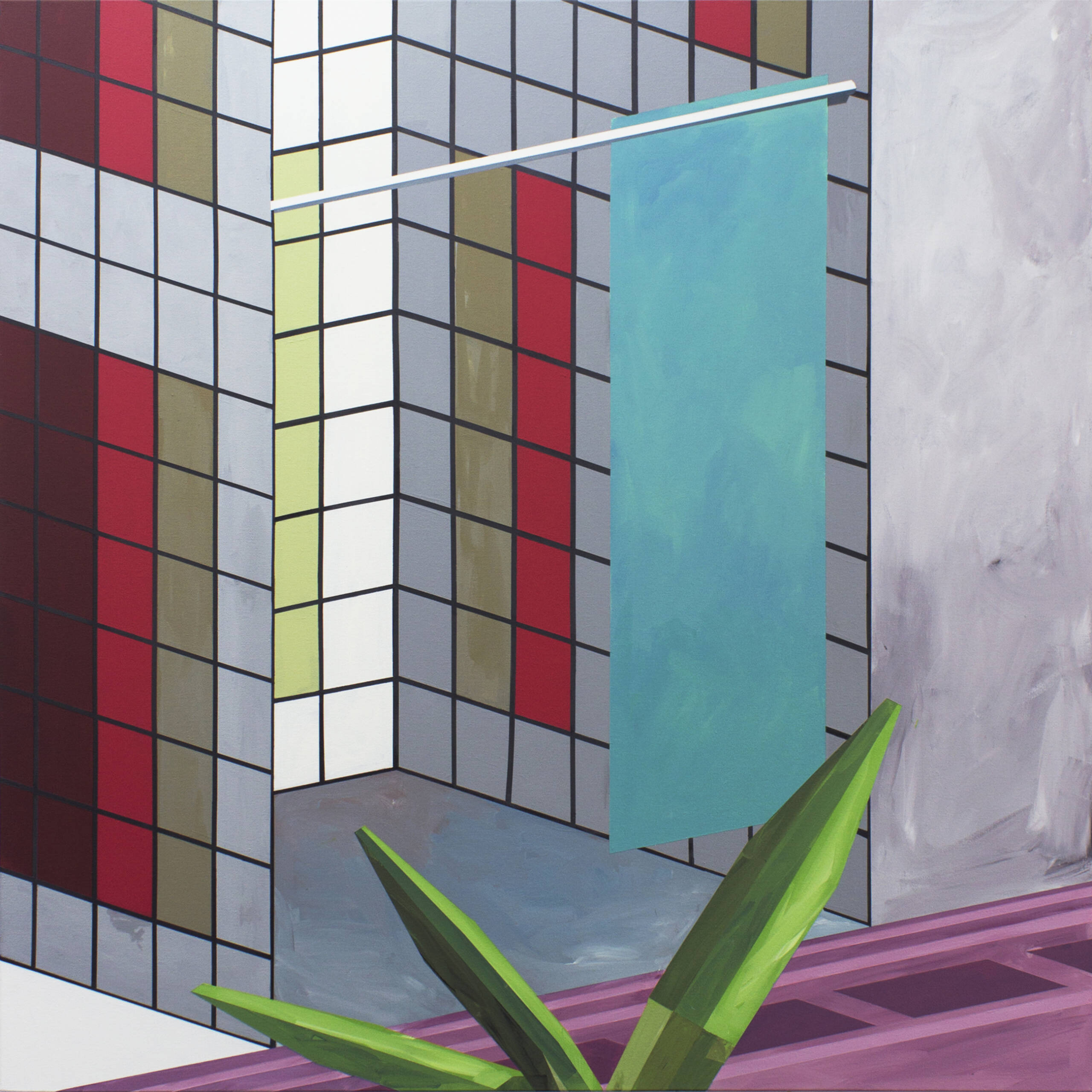
PRESENCIAS ETÉRICAS, 2026
Acrílico sobre lienzo
100 x 100 cm
Acrílico sobre lienzo
100 x 100 cm
LA FARMACIA DE ÉMILE C. (COUÉ), 2026
Acrílico sobre lienzo
120 x 100 cm
Acrílico sobre lienzo
120 x 100 cm
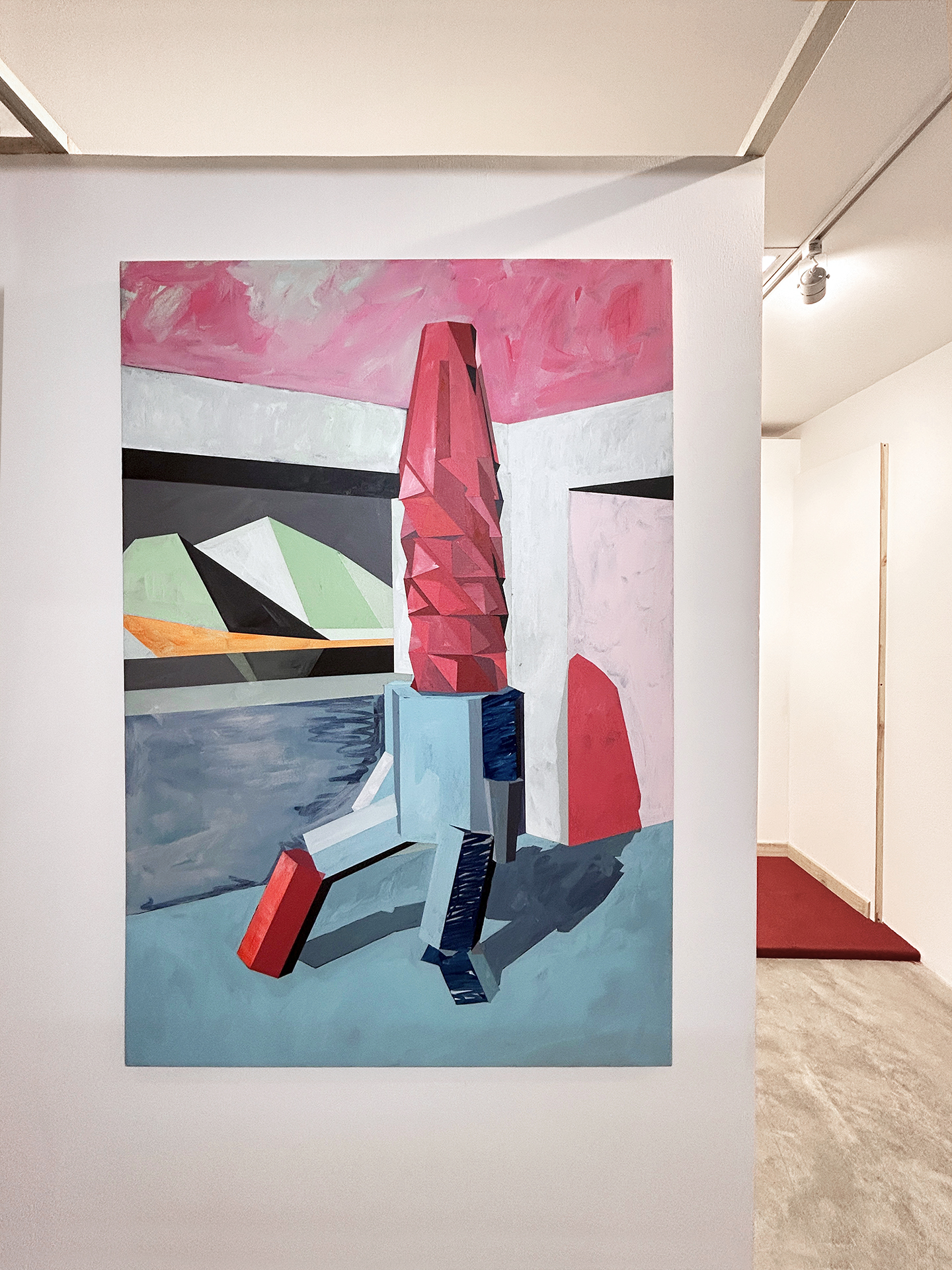
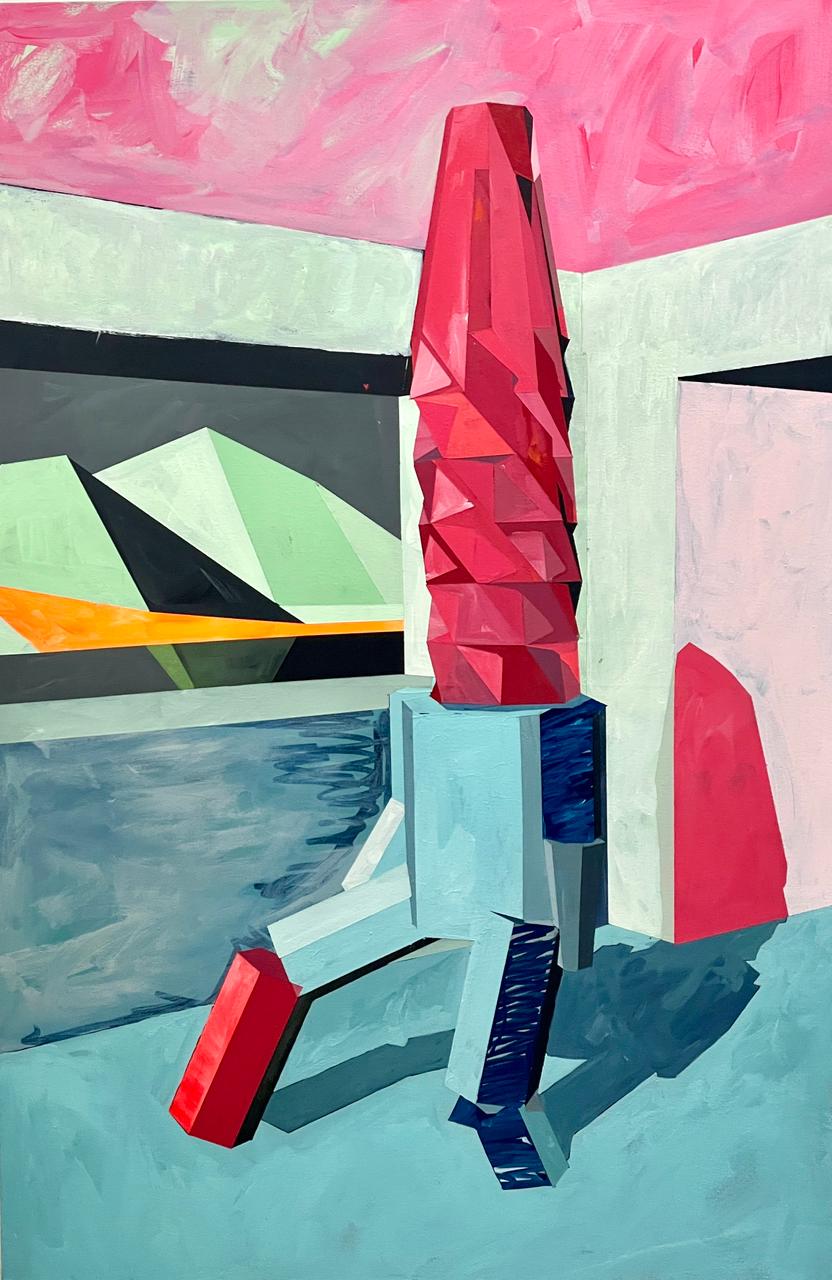
TODOS LOS DÍAS, EN TODOS LOS SENTIDOS, ME SIENTO MEJOR Y MEJOR, 2026
Acrílico sobre lienzo
120 x 80 cm
Acrílico sobre lienzo
120 x 80 cm
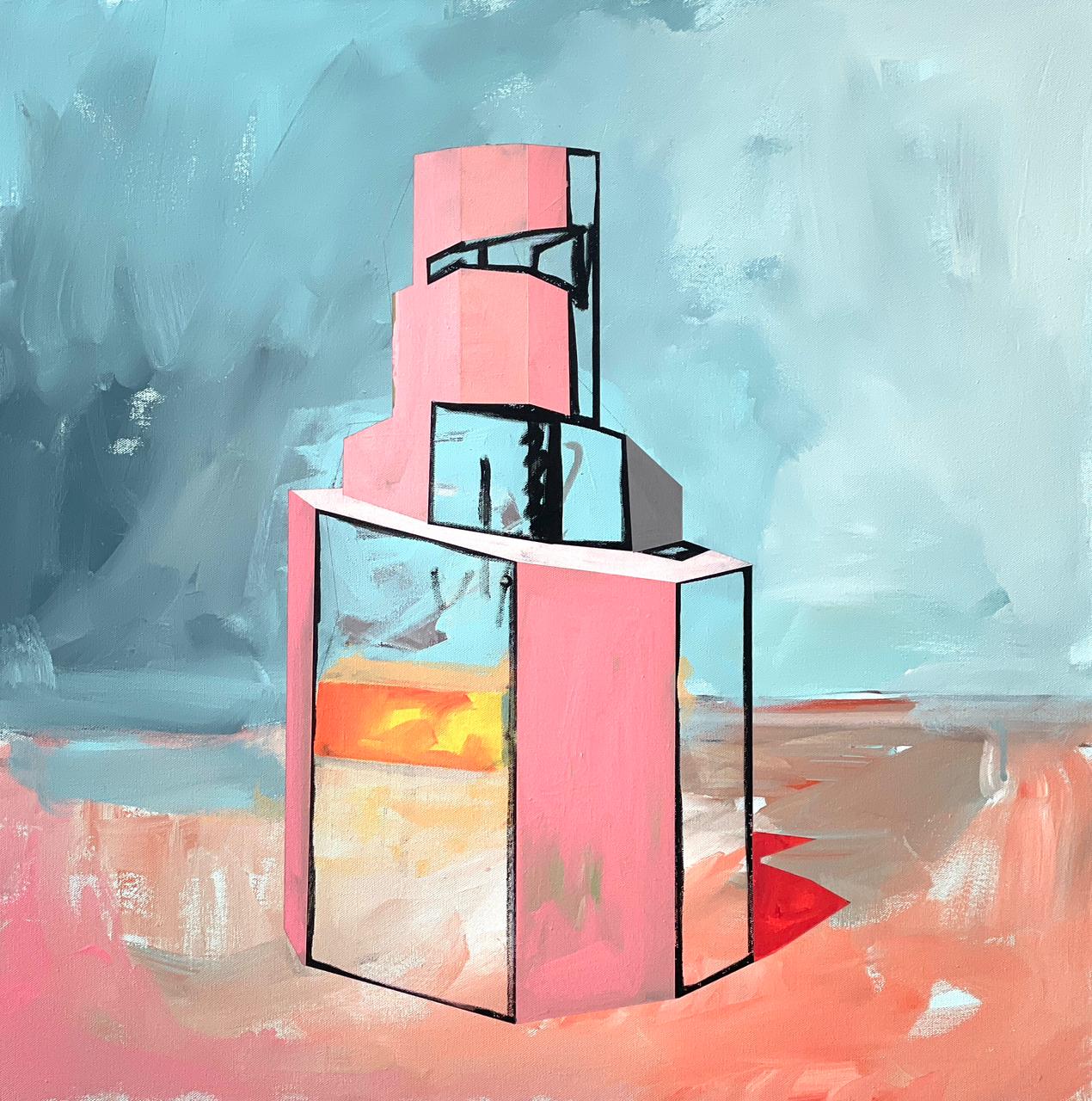
SEÑAL SOBRE SEÑAL 11, 2026
Acrílico sobre lienzo
60 x 60 cm
Acrílico sobre lienzo
60 x 60 cm
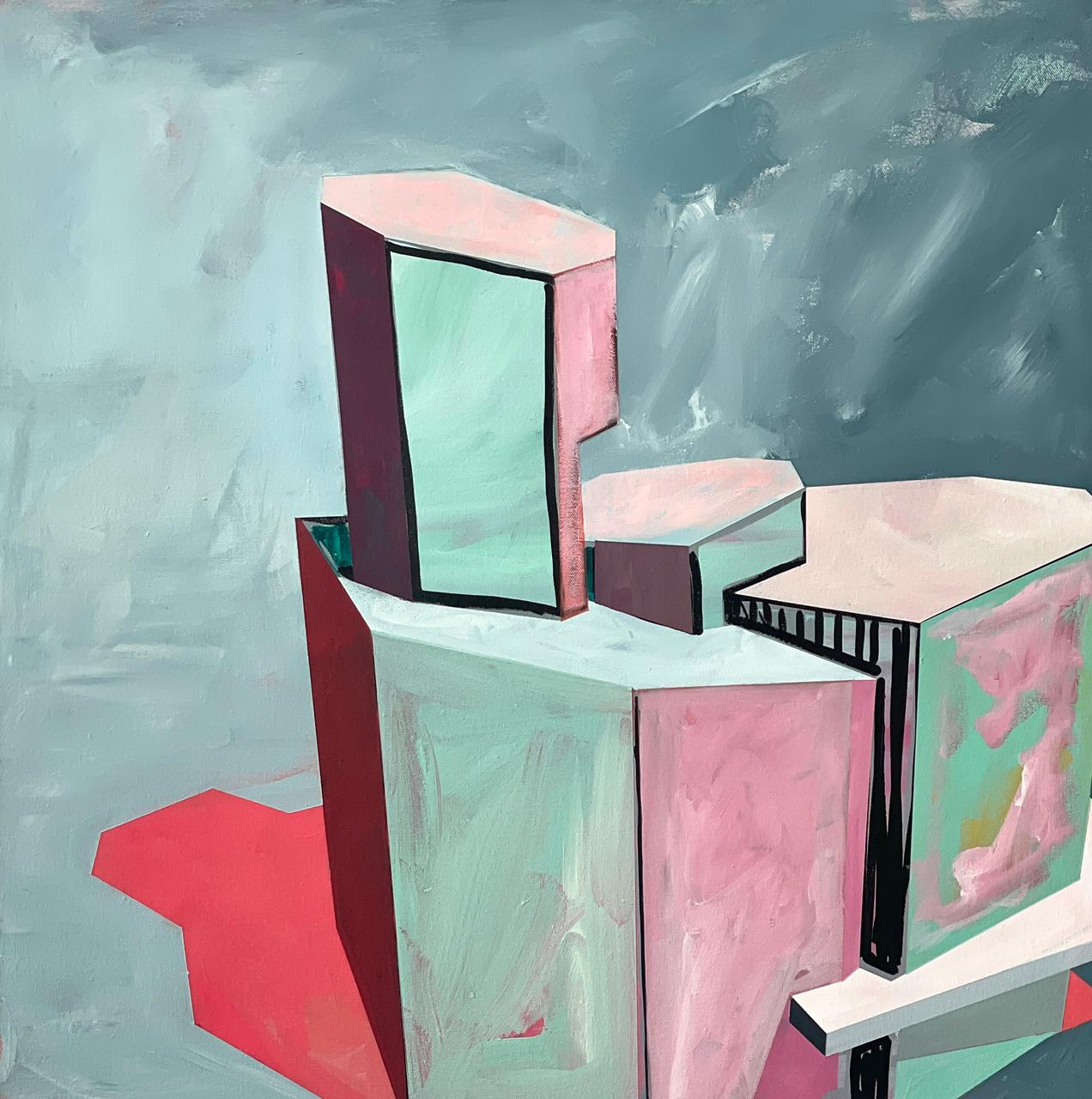
SEÑAL SOBRE SEÑAL 1, 2026
Acrílico sobre lienzo
60 x 60 cm
Acrílico sobre lienzo
60 x 60 cm
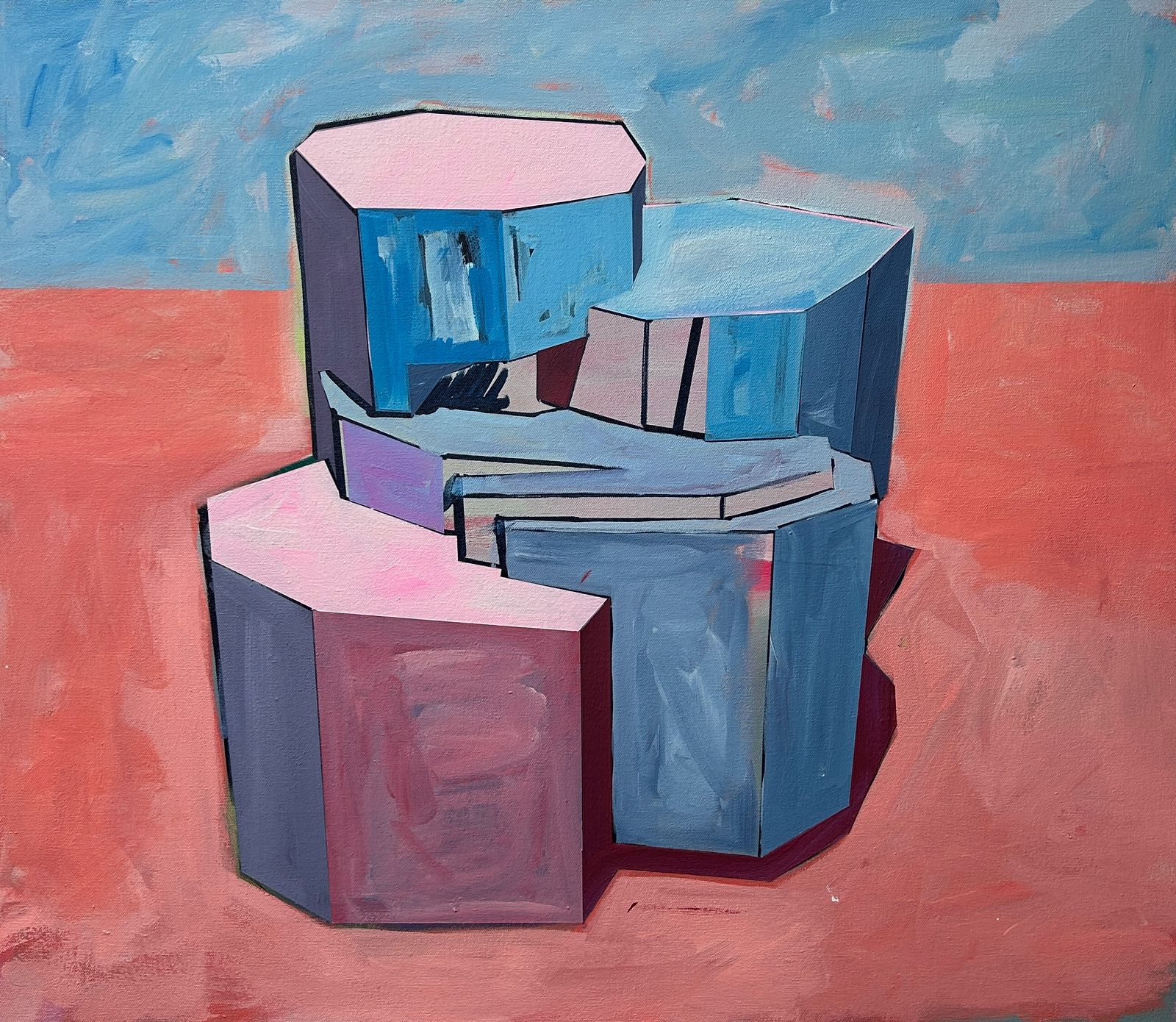
SEÑAL SOBRE SEÑAL 33, 2026
Acrílico sobre lienzo
60 x 70 cm
Acrílico sobre lienzo
60 x 70 cm
LEY DE LOS FENÓMENOS PSÍQUICOS, 2026
Acrílico sobre lienzo
120 x160 cm
Acrílico sobre lienzo
120 x160 cm
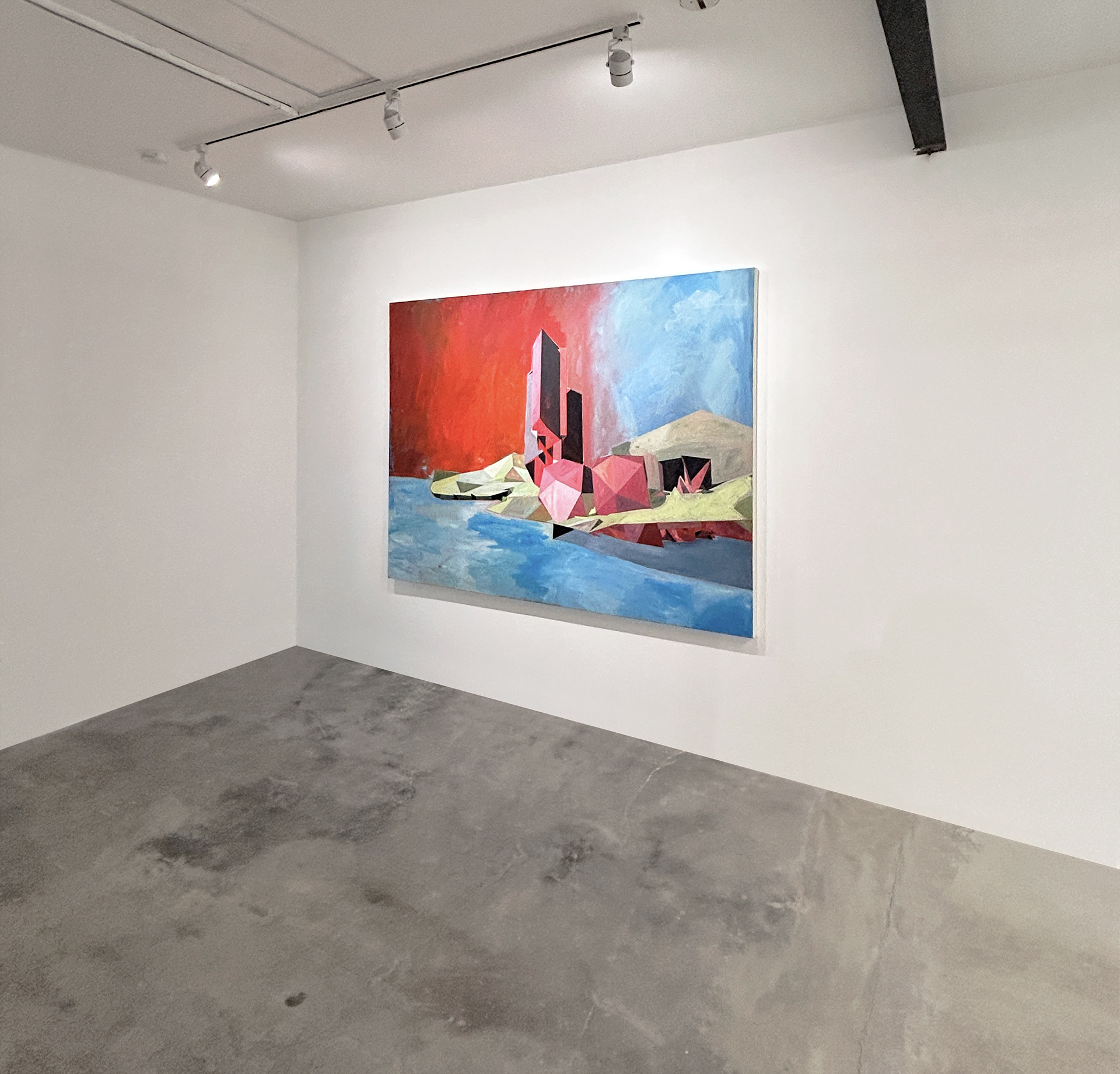
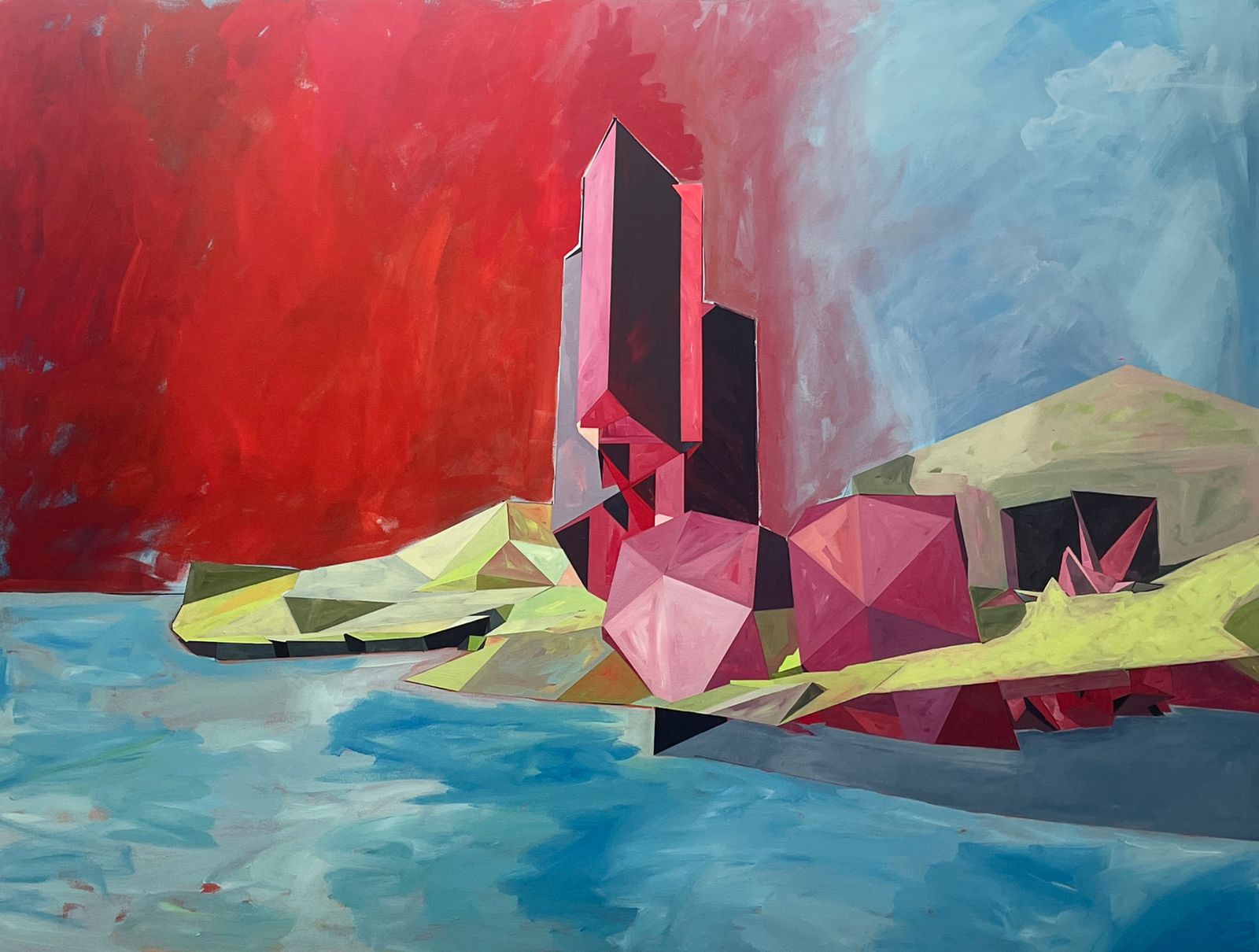
FUTURISMO AMERICANO, 2026
Acrílico sobre lienzo
140 x 186 cm
Acrílico sobre lienzo
140 x 186 cm
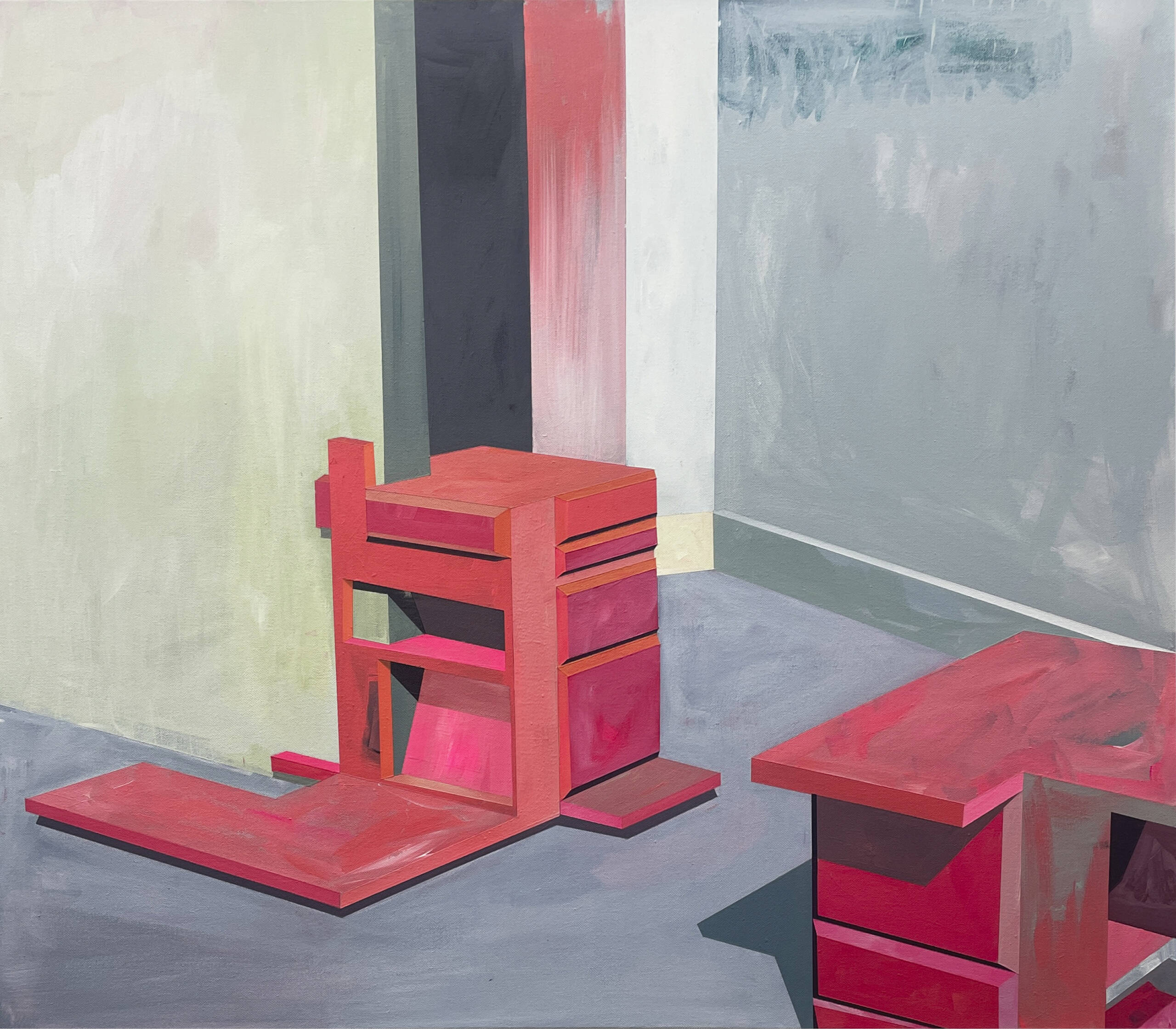
COMISIÓN DE TELEPATÍA NACIONAL, 2026
Acrílico sobre lienzo
70 x 80 cm
Acrílico sobre lienzo
70 x 80 cm
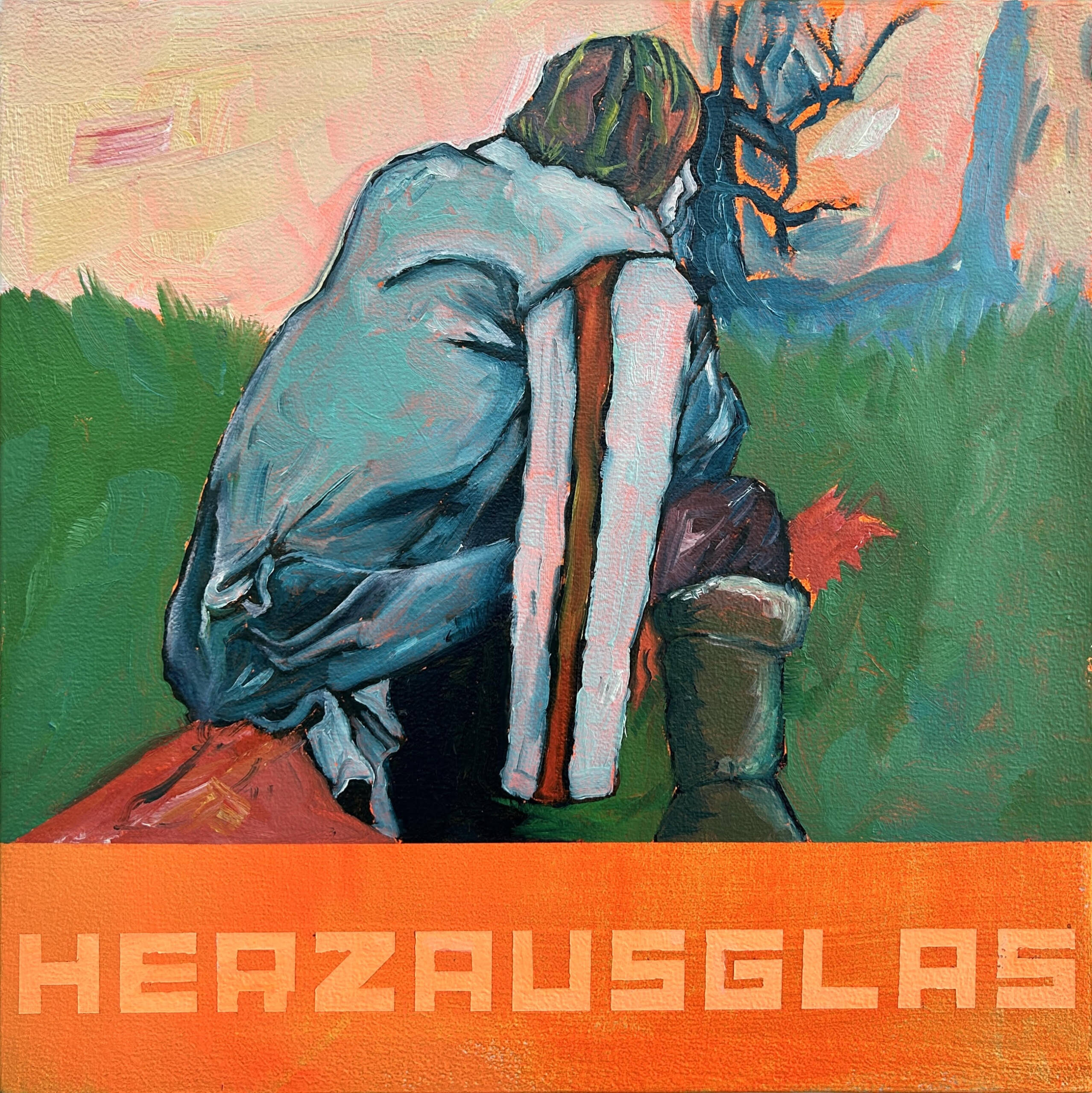
HERZ AUS GLAS (Corazón de cristal), 2026
Óleo y acrílico sobre lienzo
36 x 36 cm
Óleo y acrílico sobre lienzo
36 x 36 cm